

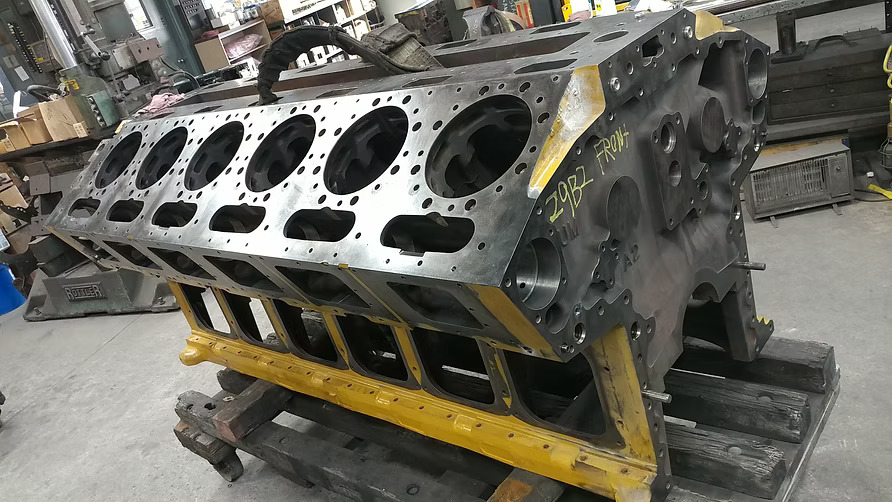
A successful diesel engine rebuild starts long before the first machining operation. Before technicians measure cylinder bores, inspect for cracks, or resurface an engine block, they need to remove the dirt and contamination hiding its actual condition.
Oil residue, sludge, rust, carbon buildup, and old gasket material can make it difficult to identify damage. Contamination left inside oil galleries and cooling passages can also create problems after the engine returns to service.
That is why a professional engine block cleaning service is an important part of diesel engine rebuilding.
Proper cleaning prepares the block for accurate inspection, precision measurements, and machining. It also helps reduce the risk of contamination-related problems during reassembly.
At Motor Service Group, our diesel engine machine shop in Miami supports marine, commercial fleet, heavy equipment, and industrial customers who need precision engine component inspection and machining.
This guide explains why engine block cleaning matters, how professional cleaning works, and what can happen when this step is overlooked.
What Is an Engine Block Cleaning Service?
An engine block cleaning service removes grease, oil, sludge, carbon deposits, rust, and other contaminants from an engine block before inspection, machining, or reassembly.
The process goes beyond washing the outside of the block.
A professional machine shop also pays attention to internal areas where contamination can collect, including oil galleries, coolant passages, threaded holes, and cylinder surfaces.
The purpose is to prepare the component for accurate evaluation and any required machining work.
What Does Professional Engine Block Cleaning Include?
Depending on the condition and design of the engine block, cleaning may involve:
- Removing grease, oil, and sludge from exterior surfaces
- Cleaning oil galleries and coolant passages
- Removing carbon deposits and loose rust
- Clearing old gasket material from sealing surfaces
- Cleaning threaded holes and hard-to-reach areas
- Removing debris left by previous engine damage
- Preparing the block for crack detection and measurement
Different blocks require different cleaning methods.
For example, cast iron and aluminum engine blocks may need different cleaning products and procedures to prevent material damage.
The goal is to remove contamination without harming the surfaces that must remain within the manufacturer’s specifications.
Why Engine Block Cleaning Is More Than a Cosmetic Step
A clean engine block is easier to inspect.
Heavy deposits can hide corrosion, pitting, cracks, and other surface defects.
If contamination remains on a deck surface or around a cylinder bore, it may also interfere with accurate measurements.
Cleaning helps technicians see the component’s condition before deciding whether machining or replacement is necessary.
It is also important for protecting the rebuilt engine.
Debris left inside an oil gallery can circulate through the lubrication system after startup, potentially damaging bearings and other moving parts.
For these reasons, diesel engine block cleaning should be treated as an important preparation step rather than a cosmetic service.
Why Engine Block Cleaning Matters Before Machining
Precision engine machining depends on accurate measurements and clean component surfaces.
Before boring, honing, milling, or resurfacing an engine block, technicians need to evaluate the condition of the casting.
Contamination can make this process more difficult and may affect machining setup.
Accurate Engine Block Machining Starts With Cleaning
A professional engine block machining process begins with inspecting the component and determining which repairs are necessary.
For example, a machinist may need to check:
- Cylinder bore diameter and roundness
- Cylinder wall wear and scoring
- Engine block deck flatness
- Main bearing bore alignment
- Corrosion around sealing surfaces
- Cracks or damage in the casting
These inspections are easier to perform when the component is properly cleaned.
Residue and debris can interfere with measuring tools or prevent the technician from seeing damaged areas clearly.
Cleaning also helps prepare surfaces for accurate machining setup.
For more information about these procedures, explore Motor Service Group’s engine block machining services.
Cleaning Helps Identify Hidden Engine Block Damage
Diesel engine blocks can develop damage after overheating, lubrication failure, corrosion, or prolonged operation.
Some defects become visible only after accumulated deposits have been removed.
A clean block allows technicians to inspect the deck surface, cylinder bores, coolant passages, and other areas more carefully.
However, cleaning alone does not confirm that a block is free from cracks.
Additional procedures, such as pressure testing or suitable crack detection methods, may be needed.
Learn more about engine block inspection before machining and the measurements that help determine whether a block can be repaired.
Proper Cleaning Supports Better Rebuild Decisions
Not every damaged engine block needs the same repair.
One block may require cylinder honing, while another may need boring, resurfacing, or more extensive machining.
In some cases, damage may make replacement the better option.
A clean component gives technicians a clearer starting point for inspection.
This helps them recommend repairs based on actual measurements and observed damage rather than assumptions.
When Does a Diesel Engine Block Need Cleaning?
An engine block should be cleaned whenever contamination could interfere with inspection, machining, or safe reassembly.
Cleaning is especially important during diesel engine rebuilding and after failures that introduce debris into the engine.
Before Inspection and Precision Measurement
Before measuring cylinder bores, checking deck surfaces, or inspecting bearing areas, the block must be clean enough for accurate evaluation.
Oil residue, sludge, and debris can hide wear or interfere with measurement.
Cleaning allows technicians to identify damage and determine which machining operations may be required.
Before Engine Block Milling or Resurfacing
Engine block milling and resurfacing are used to correct certain deck surface problems when the casting remains within service limits.
Before this work begins, the technician needs to inspect the deck for distortion, corrosion, pitting, and other damage.
Old gasket material and surface contamination can make these defects harder to evaluate.
Proper cleaning helps the machinist determine whether resurfacing is necessary and how much material can safely be removed.
Read our guide on milling an engine block to learn more about this machining process.
After Engine Overheating
Severe overheating can damage cylinder heads, gaskets, and engine block sealing surfaces.
It may also leave deposits or contamination inside the cooling system.
Before rebuilding an overheated engine, the block should be cleaned and inspected for damage.
Depending on the engine and symptoms, additional pressure testing or crack detection may be necessary.
After Bearing Failure or Internal Engine Damage
Bearing failure and other internal mechanical problems can release metal particles into the lubrication system.
These particles may remain inside oil galleries, passages, and other areas even after the damaged components are removed.
If the contamination is not cleared, it may circulate through the rebuilt engine and damage replacement parts.
Thorough cleaning is therefore particularly important after a lubrication-related engine failure.
During a Complete Diesel Engine Rebuild
A full diesel engine rebuild involves inspecting several major components.
Cleaning prepares the engine block for measurement and machining while helping technicians identify defects that may affect reassembly.
Other components, such as crankshafts and connecting rods, also need suitable cleaning and inspection.
For example, connecting rod polishing and bushing replacement require accurate measurements and careful preparation.
What Problems Can Poor Engine Block Cleaning Cause?
Skipping or rushing the cleaning process can create problems that become more expensive after engine reassembly.
The most important risks involve hidden damage, inaccurate measurements, and contamination.
1. Cracks and Corrosion May Go Unnoticed
Heavy deposits can cover areas where cracks, pitting, or corrosion have developed.
If a technician cannot clearly inspect the surface, damaged areas may be overlooked.
This is especially important after overheating or internal engine failure.
Cleaning improves visibility and helps prepare the casting for additional inspection methods.
2. Engine Machining Measurements May Be Less Accurate
Precision machining depends on clean measuring surfaces and properly prepared components.
Debris on a surface or in a measuring location can interfere with inspection.
For example, residue on an engine block deck may affect the assessment of surface condition.
Cleaning reduces these problems and helps technicians make more reliable machining decisions.
3. Debris Can Damage a Rebuilt Engine
Contamination inside oil galleries is a serious concern during engine rebuilding.
Metal particles, abrasive residue, or sludge can enter the lubrication system after startup.
These contaminants may contribute to bearing wear, oil flow problems, and damage to other moving components.
Cleaning the passages thoroughly before reassembly helps reduce this risk.
4. Sealing Problems May Return
Old gasket material, corrosion, and contamination can interfere with inspection of engine block sealing surfaces.
If the underlying surface is damaged or distorted, simply installing a new gasket may not solve the problem.
A clean deck allows technicians to evaluate whether resurfacing or another repair is necessary.
This is one reason proper preparation matters before machining and reassembly.
How Does a Professional Engine Block Cleaning Service Work?
Professional machine shops use different cleaning procedures depending on the block material, contamination level, and type of repair.
The exact equipment varies, but a thorough process generally includes preparation, cleaning, and inspection.
Step 1: Initial Inspection and Pre-Cleaning
The technician first reviews the condition of the engine block.
Heavy grease, sludge, and loose deposits may be removed before the main cleaning process.
Removable plugs and other components may also need to be taken out to provide access to internal passages.
The preparation method depends on the engine block design and the work being performed.
Step 2: Selecting the Right Engine Block Cleaning Method
Several cleaning methods are used in professional engine machine shops.
Hot tank cleaning
Hot tank systems use heated cleaning solutions to remove grease, oil, and deposits. The cleaning chemistry must be suitable for the component material.
Jet washing
Jet washers use heated cleaning solutions and directed spray to remove contamination from engine components.
Ultrasonic cleaning
Ultrasonic cleaning uses sound waves in a liquid cleaning solution to help remove deposits from accessible surfaces and passages. Its suitability depends on the component size and equipment available.
Manual and targeted cleaning
Brushes, approved cleaning products, and specialized tools may be used for oil galleries, threaded holes, and other difficult areas.
Not every machine shop uses all these methods. The appropriate process depends on the engine block and the contamination involved.
Step 3: Cleaning Oil Galleries and Coolant Passages
Internal passages require particular attention because they can trap debris.
After bearing failure, metal particles may remain inside oil galleries.
Cooling passages may contain scale, rust, or other deposits.
The technician uses suitable cleaning methods to remove accessible contamination and checks whether the passages are ready for further work.
Step 4: Final Inspection Before Machining
After cleaning, the block is inspected again.
Technicians can now evaluate surfaces and wear patterns more clearly.
Depending on the component’s condition, the next steps may include:
- Dimensional measurements
- Crack detection
- Pressure testing
- Cylinder boring or honing
- Deck resurfacing
- Main bearing bore inspection
This helps determine whether the block is suitable for machining or requires additional repair.
How Engine Block Cleaning Supports Precision Diesel Machining
Engine block cleaning and machining are closely connected.
Cleaning prepares the component for inspection. Inspection identifies wear and damage. Machining then addresses repairable conditions within the manufacturer’s specifications.
Each step supports the next.
Cleaning Before Cylinder Boring and Honing
Cylinder boring and honing are used to restore cylinder geometry or prepare cylinder surfaces for the appropriate piston and ring arrangement.
Before these procedures, technicians must inspect the cylinder bores for wear, scoring, taper, and out-of-round conditions.
Cleaning removes deposits that could interfere with inspection.
After machining, additional cleaning is also important to remove abrasive residue and metal particles.
Cleaning Before Engine Block Deck Resurfacing
Deck resurfacing requires careful inspection of the sealing surface.
Old gasket residue, corrosion, and deposits must be removed before technicians can accurately evaluate flatness and surface condition.
If machining is necessary, the amount of material removed must remain within the applicable specifications.
Cleaning helps support both inspection and machining setup.
Cleaning Before Crack Detection and Pressure Testing
Engine block cracks may develop after severe overheating, mechanical damage, or other failures.
A clean casting helps technicians examine suspicious areas and prepare the component for suitable testing.
Pressure testing can identify leaks in sealed passages.
Other inspection methods may help reveal cracks in appropriate materials.
Learn why pressure testing engine components before reassembly matters for identifying hidden leaks.
Cleaning After Engine Block Machining
Cleaning should not end once machining is complete.
Boring, honing, grinding, and other operations can leave metal particles or abrasive residue on the component.
These contaminants must be removed before the engine is assembled.
Final cleaning is especially important around cylinder walls, oil galleries, and machined surfaces.
A component should be inspected and cleaned according to the required procedure before returning to service.
Hot Tank, Ultrasonic, and Machine Cleaning: Choosing an Engine Block Cleaning Service Near You
When you search for engine block cleaning near me or a hot tank engine block near me, it helps to know which methods a shop uses. Hot tank cleaning uses heated chemical solution to break down oil, sludge, and scale. An engine block cleaning machine such as a spray-wash cabinet adds high-pressure, high-temperature washing. Ultrasonic cleaning engine block components and smaller parts uses sound waves in a cleaning bath to reach fine passages and threads.
The right method depends on the block material, the level of contamination, and what machining comes next. Whatever the method, the goal is the same: a surface clean enough for accurate measurement and crack testing. Learn why that matters in our guide to engine block cleaning before machining.
After cleaning, blocks are typically checked with magnaflux crack detection and then moved into engine block machining such as boring, sleeving, decking, or align boring.
Why Choose Motor Service Group for Engine Block Cleaning in Miami?
Motor Service Group has provided precision diesel engine machining and component repair services in Miami since 1949.
Our machine shop supports marine repair businesses, commercial fleets, construction equipment operators, power generation facilities, and industrial customers across South Florida.
We understand that proper preparation is essential before any precision machining work begins.
Engine Block Cleaning as Part of the Machining Process
Our diesel engine machine shop focuses on inspection, measurement, and machining of critical engine components.
Engine block cleaning and preparation help support accurate evaluation before repair decisions are made.
Depending on the condition of the block, additional services may include:
- Engine block inspection
- Cylinder boring and honing
- Deck resurfacing
- Main bearing bore inspection and machining
- Crack detection
- Pressure testing
- Other precision diesel engine machining procedures
For customers looking for engine block machining in Miami, our team can help evaluate the component and discuss the work required.
Explore our engine block machining services for more information.
Serving Marine, Fleet, and Industrial Customers in South Florida
Motor Service Group supports customers who depend on heavy-duty diesel engines for daily operations.
Marine engines, construction machinery, fleet vehicles, and industrial equipment can experience different types of wear and contamination.
Proper cleaning and inspection help technicians evaluate these components before machining.
Our Miami machine shop serves customers throughout Miami-Dade, Broward, and Palm Beach counties.
Frequently Asked Questions About Engine Block Cleaning
What Is Included in an Engine Block Cleaning Service?
It generally includes removing oil, grease, sludge, carbon, rust, and gasket residue from surfaces and passages before inspection or machining.
Why Is Engine Block Cleaning Necessary Before Machining?
Cleaning exposes damage, improves inspection accuracy, and removes contamination that could interfere with measurements and machining.
Can a Dirty Engine Block Affect Rebuild Quality?
Yes. Remaining debris can hide damage during inspection and may circulate through the engine after reassembly.
What Is Hot Tank Cleaning for an Engine Block?
Hot tank cleaning uses heated cleaning solutions to remove oil, grease, and deposits. The method must suit the engine block material.
Should an Engine Block Be Cleaned After Machining?
Yes. Final cleaning removes metal particles, abrasive residue, and other contaminants before engine reassembly.
Does Engine Block Cleaning Remove Cracks?
No. Cleaning helps reveal damage but does not repair cracks. Additional inspection and machining or replacement may be necessary.
Prepare Your Engine Block for Precision Machining
Proper engine block cleaning is an important part of a reliable diesel engine rebuild.
Removing sludge, rust, gasket residue, and other contamination helps technicians inspect the casting, take accurate measurements, and prepare the block for machining.
It also reduces the risk of debris remaining inside the engine after reassembly.
Motor Service Group provides diesel engine component inspection and precision machining services in Miami, Florida.
If your engine block needs cleaning and preparation before machining, our team can help assess the component and recommend the appropriate next steps.
Contact Motor Service Group today to discuss your diesel engine block and request an estimate.