

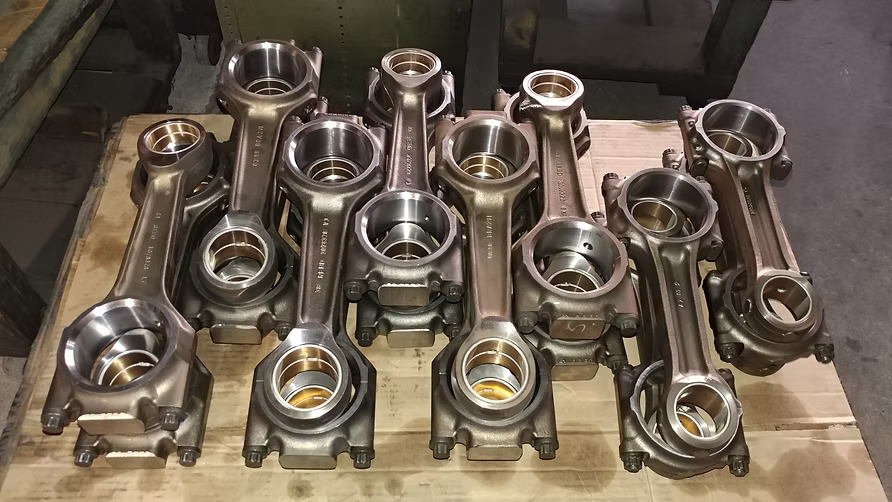
Connecting rod bushing wear is one of the easiest diesel rebuild problems to underestimate. The bushing is small, but its job is not. It controls fit at the small end of the rod, supports smooth movement at the pin interface, and helps the rod operate the way it was designed to under load. When that fit starts to degrade, the problem does not stay confined to one replaceable part. It begins to affect motion, contact patterns, and long-term durability at a critical point in the assembly.
That is why connecting rod bushing wear deserves close attention during teardown. A worn bushing may not look dramatic on the bench, but once clearance changes or surface damage develops, the rod is no longer in the condition it should be for a quality rebuild. In diesel engines, where heat, load, and operating hours are higher than in many lighter-duty applications, that matters fast.
This is not just a wear-item discussion. It is a rebuild-quality issue.
Why connecting rod bushing wear matters in diesel engines
The connecting rod bushing supports movement where the pin and rod meet. That fit has to be controlled. If it gets too loose, too worn, or incorrectly sized, the rod no longer carries motion the way it should.
That matters because the small end of the rod is not a cosmetic area. It is a working fit point. If the bushing condition is poor, the assembly can develop:
- incorrect clearance
- unstable pin fit
- abnormal contact patterns
- accelerated surface wear
- added stress at the small end
In a diesel engine, these problems tend to show up under harsher conditions. High cylinder pressure, long duty cycles, and repeated heavy loading put more demand on the rod assembly. Marine engines, generators, industrial units, fleet vehicles, and construction equipment all operate in environments where a loose or worn bushing can become an expensive oversight.
A rebuild can include new parts elsewhere and still fall short if this fit point is not corrected properly.
Connecting rod bushing wear signs you should not ignore
The early warning signs are not always dramatic. That is why bushing wear needs to be judged by condition and fit, not by appearance alone.
Loose fit or incorrect clearance
One of the clearest connecting rod bushing wear signs is a change in fit at the small end. If the bushing no longer holds the intended clearance, the rod has already moved out of proper reusable condition.
This is often where trouble begins. The rod may still look serviceable overall, but the fit point that controls movement has already started to break down.
Scoring, galling, or friction damage
Surface distress is another strong indicator. Common examples include:
- scoring
- galling
- rough contact marks
- abnormal wear streaks
- visible friction damage
These signs usually point to poor lubrication, poor fit, or both. They also suggest that the wear pattern has progressed beyond simple cosmetic aging.
Heat marks or discoloration
Discoloration at the bushing area should never be ignored. It often points to friction, excess heat, or contact conditions that were not normal during operation.
Uneven wear patterns
Wear that is heavier on one side than another usually tells a bigger story. It can point to alignment problems, poor load distribution, or a fit issue that caused the bushing to wear unevenly instead of gradually.
Minor-looking wear that already affects serviceability
This is where many rebuilds go wrong. A bushing can look “not too bad” and still be worn enough to justify replacement and sizing. In diesel engine work, visual comfort is not the standard. Correct fit is the standard.
Connecting rod bushing wear causes in diesel engines
A worn bushing always has a reason behind it. If the cause is ignored, replacing the bushing alone may not fully protect the rebuild.
Poor lubrication
Insufficient lubrication is one of the most common causes of connecting rod bushing wear. When the oil film breaks down, surface contact increases. That leads to more friction, more heat, and faster wear at the small end.
Incorrect sizing after previous service
A new bushing can fail early if it was never machined to the correct diameter. This is one of the most important diesel machine shop realities: installing a new bushing is not the same thing as finishing the repair. If the final size is wrong, the fit is wrong.
Improper installation or poor fit retention
A bushing that was not installed correctly can start wearing long before it should. Poor installation affects how the part sits, how it holds fit, and how it responds under load.
Heat and overload conditions
Diesel engines operate under high stress. If the engine has been exposed to overheating, detonation-related stress, abnormal combustion load, or severe operating conditions, the bushing may show damage faster than expected.
Long service intervals in heavy-duty applications
Sometimes the cause is not one dramatic event. It is accumulated wear from long hours under demanding conditions. In working diesel equipment, that is common. Time, load, and temperature do not have to create instant failure to create a real correction point.
What problems can worn rod bushings cause?
Worn bushings do not just affect the bushing itself. They change how the rod assembly operates.
That can lead to:
- excessive clearance at the small end
- unstable pin movement
- abnormal contact between surfaces
- added wear on related parts
- reduced dimensional control in the rod assembly
- weaker rebuild quality
- shorter service life after reassembly
This is what makes bushing wear so important. It does not have to create a catastrophic failure on its own to be a serious rebuild issue. It only has to reduce fit quality enough to start wearing the assembly the wrong way once the engine is back in service.
That is why experienced diesel machine shops do not treat bushing wear like a minor side note. They treat it like a precision correction point.
How a diesel machine shop inspects connecting rod bushing wear
A proper inspection process should be deliberate. The shop is not just looking for obvious damage. It is trying to determine whether the fit point is still serviceable and whether the wear is isolated or part of a broader rod issue.
1. Clean the rod first
The rod has to be cleaned before the bushing can be judged accurately. Oil residue and buildup can hide wear patterns, discoloration, and surface damage.
2. Inspect the bushing surface and surrounding area
Once cleaned, the rod can be checked for visible scoring, galling, discoloration, rough wear patterns, and other signs of distress. This is where surface clues start to show whether the bushing has been running in poor conditions.
3. Evaluate fit and serviceability
This is the most important stage. The shop has to determine whether the bushing still holds the fit it should, whether replacement is needed, and whether the rod remains a good candidate for reuse after correction.
4. Check whether the wear points to a larger rod-service issue
Sometimes the problem is limited to the bushing. Sometimes it is part of a bigger wear story that also involves rod condition, dimensional concerns, or other corrective needs. That is why a good inspection goes beyond the bushing alone.
How connecting rod bushing repair works
Proper repair is about restoring fit, not just replacing hardware.
A professional process generally includes:
- removing the worn bushing
- installing a new bushing
- cutting or sizing the new bushing to the correct diameter
- verifying the final fit before reuse
This is where quality machine work matters most. A rod is not properly repaired just because a new bushing has been pressed in. If the finished diameter is wrong, the repair is incomplete. The bushing has to be machined to the correct size so the rod returns to service in usable condition.
That is also why bushing repair should not be treated like a general shop shortcut. This is precision work at a critical fit point.
When connecting rod bushing wear becomes a larger rod-service issue
Bushing wear is sometimes a contained repair. In other cases, it is the first visible sign of broader rod wear.
That becomes more likely when inspection also shows:
- distress beyond the bushing area
- broader wear patterns in the rod
- dimensional concerns
- signs that the rod may need additional corrective work
In those cases, bushing service may connect with a larger rod-service process that includes further inspection and correction before the rod is ready to go back into the engine.
This is where experience matters. A good shop knows when the problem starts and stops at the bushing, and when it signals something bigger.
Why precision rod service matters for diesel owners in Miami
For owners of marine engines, industrial units, generators, fleet equipment, and construction machinery, downtime is expensive. A missed fit issue at the small end can turn into more labor, more wear, and more disruption after the rebuild is already back in service.
That is why the machine shop matters. A diesel-focused shop brings more value when it treats connecting rod bushings as precision repair points, not as minor details to rush through.
Motor Service Group’s positioning in Miami fits that kind of work. The shop focuses on precision machining, inspection, and repair of key diesel engine components. For connecting rods, that includes bushing replacement, sizing, and the controlled service steps needed to restore fit before reassembly.
Restore Small-End Fit Before It Becomes a Bigger Problem
If your diesel engine is already in teardown, that is the right time to catch connecting rod bushing wear before it affects the rebuild after reassembly.
Motor Service Group provides connecting rod inspection, bushing replacement, sizing, and precision rod service in Miami for heavy-duty diesel engines.Contact our team to evaluate your components and restore proper fit before worn bushings create larger engine problems.