

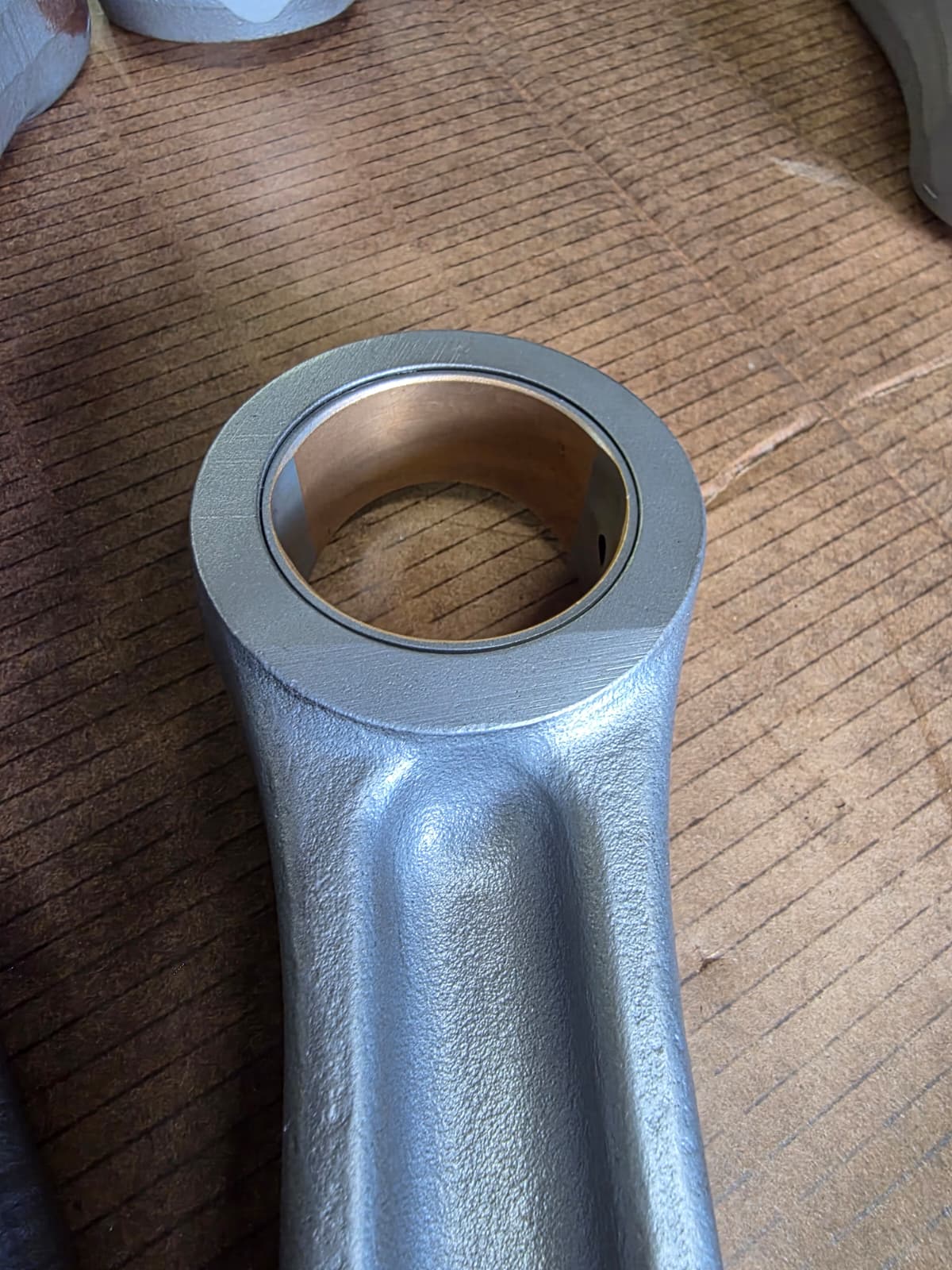
In a diesel engine rebuild, the components that get the most attention are usually the biggest ones — the block, the crankshaft, the cylinder heads. The connecting rod bushing rarely makes that list. It is small, inexpensive relative to the rest of the engine, and easy to overlook during inspection. That is exactly why it causes so many failures. This post covers what the connecting rod bushing actually does, what happens when it fails or is installed incorrectly, and why skipping proper bushing work during a diesel rebuild is one of the most expensive mistakes a shop can make.
What a Connecting Rod Bushing Actually Does
The Small End vs The Big End
A connecting rod has two ends. The big end connects to the crankshaft journal and uses a bearing to manage that high-load rotating contact. The small end connects to the piston pin, and that is where the connecting rod bushing lives. The bushing is a thin cylindrical sleeve pressed into the small end opening that provides a controlled, lubricated surface for the piston pin to move against during combustion cycles.
How the Bushing Controls Piston Pin Fit
The piston pin oscillates inside the small end housing thousands of times per minute under extreme heat and load. The bushing controls the fit between the pin and the rod, manages lubrication distribution, and absorbs the wear that would otherwise occur directly on the rod. When fit is within specification, the oil film holds, friction is minimal, and the rod functions as intended. When tolerance is off in either direction, the consequences move through the entire engine.
Why Diesel Engines Are More Demanding on Bushing Condition
Diesel engines operate at higher combustion pressures than gasoline engines. The forces transmitted through the connecting rod on each power stroke are significantly greater, which means the small end bushing works harder, generates more heat, and wears faster under marginal conditions. A bushing that might last years in a light-duty application can fail quickly in a marine diesel, a fleet truck, or heavy equipment running under continuous load.
What Happens When a Connecting Rod Bushing Fails
The Warning Signs Before Catastrophic Failure
Bushing failure does not usually happen without warning. The early signs include:
- A light knocking or tapping sound at idle that changes with engine speed
- Increased oil consumption without an obvious external leak
- Reduced oil pressure readings, particularly at idle
- Slight piston slap that worsens as the engine warms up
These symptoms are often misdiagnosed as bearing noise or general wear. By the time the sound becomes obvious, the bushing has already allowed enough movement to begin damaging adjacent components.
How Bushing Failure Spreads to Adjacent Components
A worn connecting rod bushing does not fail in isolation. As the gap grows beyond specification, the piston pin begins to rock and hammer inside the housing. That movement creates heat, accelerates wear on the pin itself, and begins to distort the small end geometry. The damage then travels in two directions — upward toward the piston and downward through the rod. Piston pin bosses crack under repeated impact loading. The rod opening becomes oval, making any future bushing installation unreliable. In severe cases, the pin seizes or fractures, and the connecting rod separates from the piston, creating catastrophic internal damage that destroys the block, the crankshaft, and surrounding rods.
The Cost of Running a Diesel Engine With a Failed Bushing
The bushing itself costs very little. Correcting a failure that was allowed to progress costs significantly more. A single rod with a failed bushing driving piston pin damage, distortion, and secondary rod failure can turn a straightforward rebuild into a full engine replacement. For marine operators, fleet managers, and heavy equipment owners, that cost includes not just parts and labor but downtime that compounds every hour the equipment is out of commission.
Why Connecting Rod Bushings Are the Most Overlooked Failure Point in a Rebuild
Why Shops Skip Bushing Inspection
Connecting rod bushings are often not inspected thoroughly because they do not look worn at a glance. A shop that cleans the rods, checks the big end, and moves on without measuring fit or evaluating bushing condition is skipping the step that matters most for long-term reliability. The bushing may appear intact but still be outside specification. Visual checks alone are not sufficient. Measurement is required.
For a detailed breakdown of what the polishing and bushing replacement process actually involves, read our post on connecting rod polishing and bushing replacement.
What Incorrect Bushing Installation Looks Like
Installation errors are as damaging as worn bushings. Common mistakes include:
- Pressing the bushing in without checking alignment
- Failing to machine the bushing to final tolerance after installation
- Installing a bushing with the oil hole misaligned, blocking lubrication to the pin
- Using a replacement bushing with incorrect wall thickness for the application
Any of these errors produces a fit problem the engine will expose under load, often within the first hours of operation after rebuild.
How Improper Fit Creates a Future Failure
A fit that is too tight causes heat buildup and seizure. One that is too loose allows impact loading and accelerated wear. Neither condition is visible during assembly without proper measurement. The engine will start, run, and appear normal until the error creates enough damage to generate symptoms. At that point, the rebuild has already failed.
What Proper Connecting Rod Bushing Service Involves
Inspection Before Any Decision Is Made
Proper work starts with measuring the existing small end opening and piston pin diameter to determine actual fit. The rod is also checked for distortion, cracks, and alignment before any machining decision is made. A rod that is bent, cracked, or severely distorted is not a good candidate for bushing replacement alone.
Replacement and Precision Machining
Once the rod is confirmed serviceable, the old bushing is removed and a new one is pressed in with proper alignment. The oil hole is confirmed to match the rod’s lubrication passage. The bushing is then finish-machined to achieve the correct diameter and surface finish for the specific piston pin application. This step cannot be skipped. A pressed-in bushing without final machining will not hold proper tolerance.
Verification Before the Rod Returns to Service
After machining, the opening is measured against the piston pin to confirm fit is within specification. Surface finish is checked. The rod is inspected one final time before returning to assembly. This verification step is what separates a precision rebuild from a parts swap.
For the same level of evaluation applied to the crankshaft, read our guide on crankshaft repairs and how to know when to grind, polish, or replace.
How Diesel Connecting Rod Repair in Miami Should Be Approached
What to Ask a Shop Before Approving Rod Work
Before any shop touches the connecting rods, ask directly:
- Do you measure small end fit before and after bushing installation?
- Do you finish-machine bushings after pressing them in?
- Do you check oil hole alignment on every rod?
- Do you inspect rods for distortion and cracks before approving them for reuse?
A shop that cannot answer yes to all four is not performing complete rod repair regardless of what they call it.
Why Machine Shop Capability Matters
Connecting rod bushing replacement requires precise boring and finishing equipment, not just a press and a replacement part. A shop without the tooling to finish-machine a bushing to tolerance after installation cannot produce a reliable result. This is not a job for a general repair facility — it requires a machine shop with the equipment and process discipline to hold tight tolerances consistently.
Red Flags That Signal Incomplete Rod Work
Watch for these signs that the job was not done correctly:
- No documentation of fit measurements before and after
- Rods returned without evidence of machining on the new bushing surface
- No inspection report showing rod alignment or crack detection results
- Turnaround time too fast to have included measurement and machining
For more on what to look for when evaluating a diesel repair facility, read our post on why your diesel engine needs a specialist, not a general repair shop.
How Motor Service Group Handles Connecting Rod Service in South Florida
Motor Service Group has provided diesel engine machine shop support in Miami since 1949. Connecting rod bushing replacement, small end boring, alignment inspection, and crack detection are performed in-house using precision machining equipment built for the tolerances diesel engines demand.
Every rod that comes through the shop is measured, inspected, and verified before it returns to assembly. The team works on marine engines, fleet trucks, heavy equipment, generators, and industrial diesel applications across Miami-Dade, Broward, and Palm Beach counties.
Support includes:
- Small end fit measurement and evaluation
- Connecting rod bushing removal and replacement
- Finish machining to OEM specification after installation
- Oil hole alignment verification on every rod
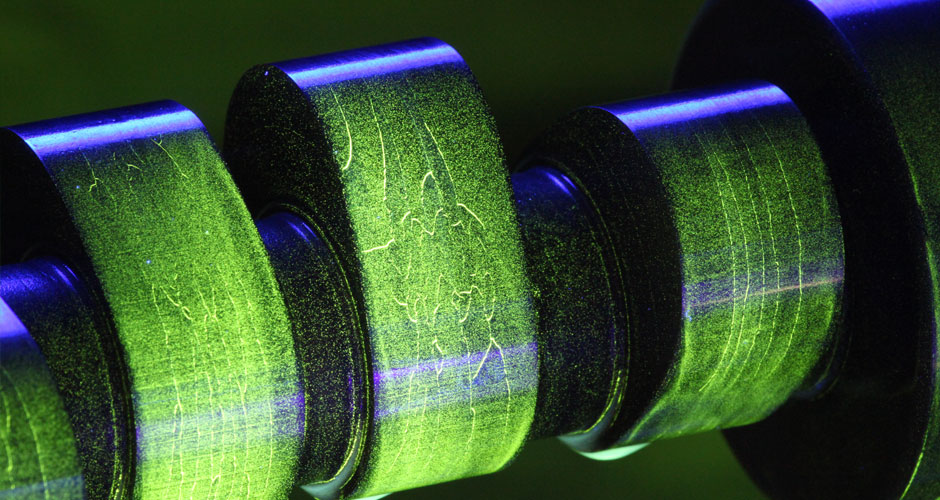
- Magnaflux crack detection before any rod is approved for reuse
- Full tolerance verification before return to assembly
Quick Answers
Q: What does a connecting rod bushing do in a diesel engine?
It provides a controlled, lubricated surface at the small end of the connecting rod where the piston pin moves during combustion cycles. It manages fit, distributes lubrication, and absorbs wear that would otherwise damage the rod directly.
Q: What are the symptoms of a worn or failed connecting rod bushing?
Knocking or tapping at idle that changes with engine speed, increased oil consumption, reduced oil pressure at idle, and piston slap that worsens as the engine reaches operating temperature. These symptoms are often mistaken for other issues until the damage has already progressed.
Q: Can a diesel engine run with a bad connecting rod bushing?
It will run, but the damage compounds with every hour of operation. A worn bushing allows increasing piston pin movement that damages the pin, the rod, and eventually the piston. Continued operation accelerates the failure and significantly increases the cost of repair.
Q: What does proper connecting rod bushing service involve?
Measuring existing fit, inspecting the rod for distortion and cracks, removing the worn bushing, pressing in a replacement with correct alignment, finish-machining to specification, verifying oil hole alignment, and confirming final tolerance before the rod returns to assembly.
Q: Does Motor Service Group perform connecting rod bushing replacement in Miami?
Yes. Motor Service Group performs complete connecting rod work including bushing replacement, precision boring, crack detection, and tolerance verification for diesel engines across South Florida. Contact the team to discuss your engine and schedule service.
Precision Starts Here
Motor Service Group has supported diesel engine repairs across South Florida since 1949.
Contact our expert team today for connecting rod service, bushing replacement, and precision machining built for engines that cannot afford to fail.