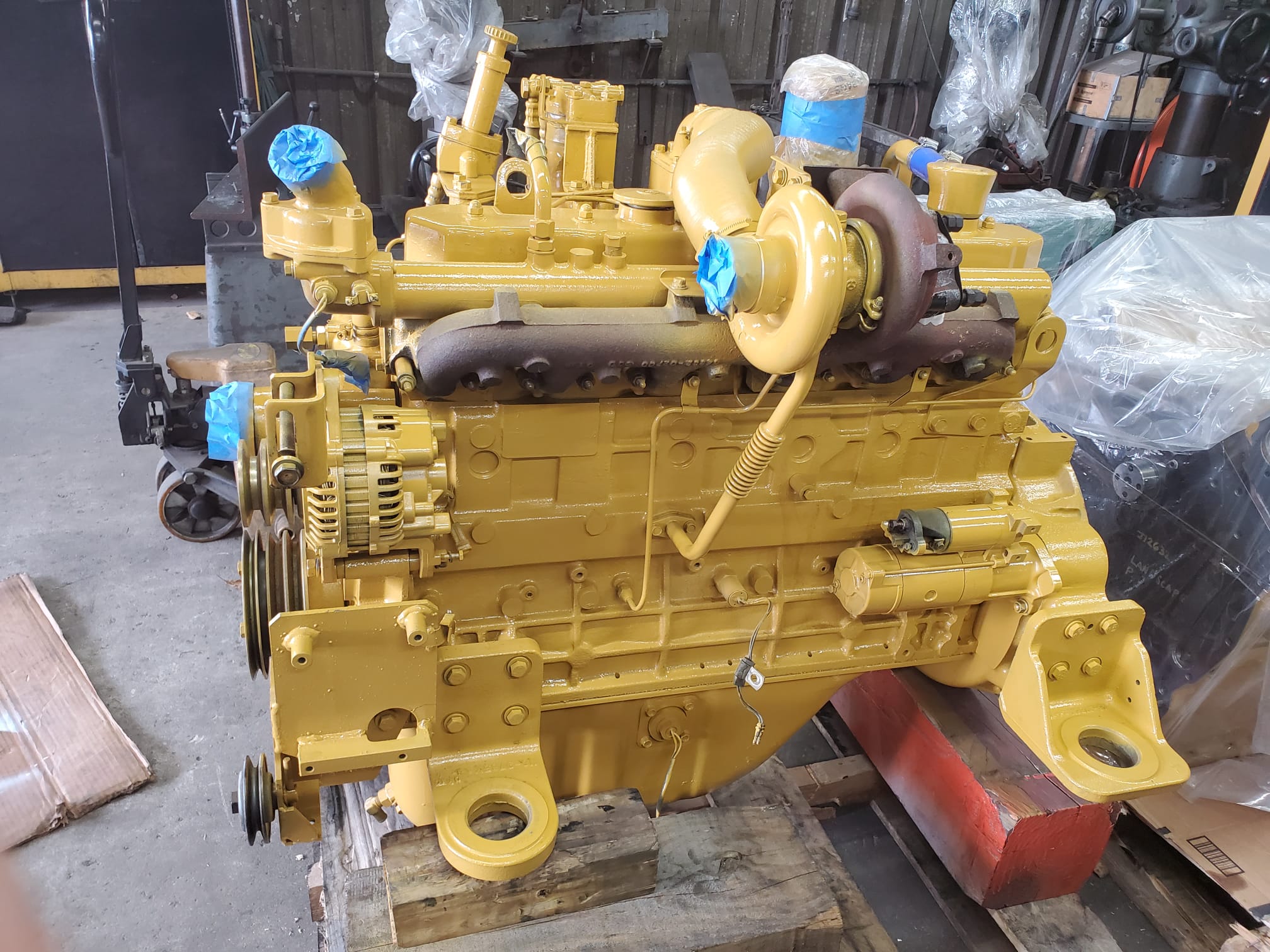


Rebuilding a diesel engine is a significant investment of time, labor, and money. One skipped inspection step can send all of that straight to waste. Magnaflux crack detection is the test that separates a reliable rebuild from one that fails six months later, and it is not optional.
What Magnaflux Crack Detection Actually Is
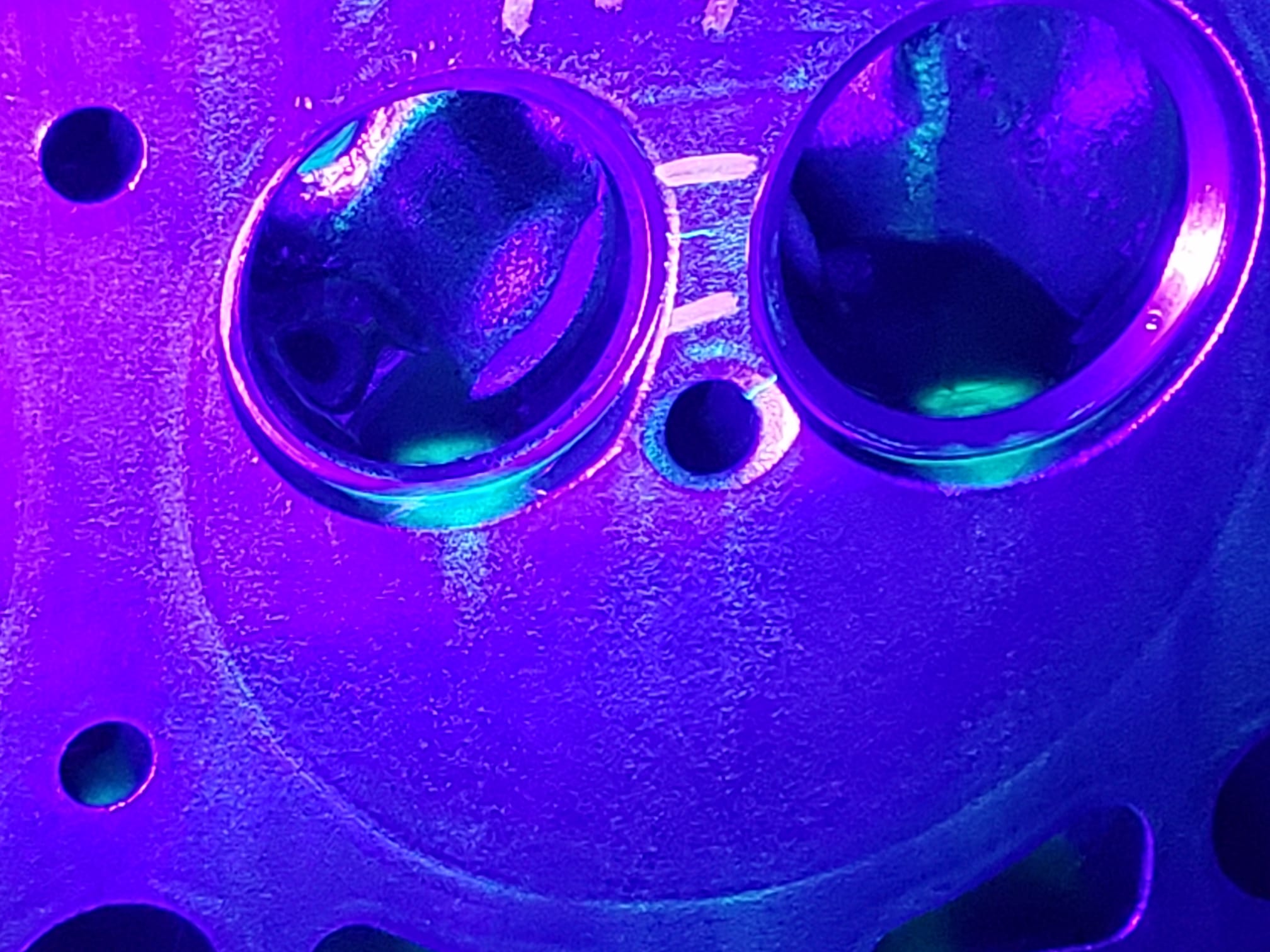
Magnaflux is a brand name that has become the industry term for magnetic particle inspection in engine machining. The process uses an electrical current to magnetize a ferrous component, then floods it with a solution containing iron oxide particles. Where a crack exists, the magnetic field leaks out and pulls the particles into the void. An ultraviolet black light makes those particles glow, revealing defects that are completely invisible to the naked eye.
The Science Behind Magnetic Particle Inspection
Magnetic particle inspection works on the principle of flux leakage. When a magnetic field passes through a solid, unbroken surface, it flows evenly. When it hits a crack or void, it escapes through the surface and creates a leakage point. Iron particles suspended in solution are drawn directly to those leakage points, marking the exact location and shape of the defect.
Wet vs. Dry Magnaflux: What a Professional Shop Uses
Wet magnaflux uses a liquid suspension of iron particles, which provides higher sensitivity and is the standard method used in professional diesel engine machine shops. Dry powder methods exist but are less precise and better suited for large structural components. For engine components where tolerances are measured in thousandths of an inch, wet magnaflux is the correct choice.
Why Cracks in Engine Components Are So Dangerous
A crack in an engine component does not stay the same size. Every heat cycle, every combustion event, and every pressure spike causes it to grow. What starts as a hairline fracture becomes a structural failure under operating conditions.
How Hairline Cracks Lead to Catastrophic Failure
Cracks in high-stress areas, such as the fillet between a crankshaft journal and web or the combustion chamber area of a cylinder head, are subject to cyclic loading every time the engine runs. The crack propagates with each cycle until the component fractures completely. At that point, the failure is rarely contained to just one part.
Why Visual Inspection Alone Is Never Enough
The human eye cannot detect a crack smaller than roughly 0.1mm under normal lighting. Many of the cracks that cause engine failures are far smaller than that at the time of inspection. A component can look perfectly clean on the surface and still carry a defect that will end the rebuild prematurely.
Which Engine Components Require Magnaflux Testing
Any ferrous engine component that operates under significant stress or heat should be tested before it goes back into service.
Engine Blocks
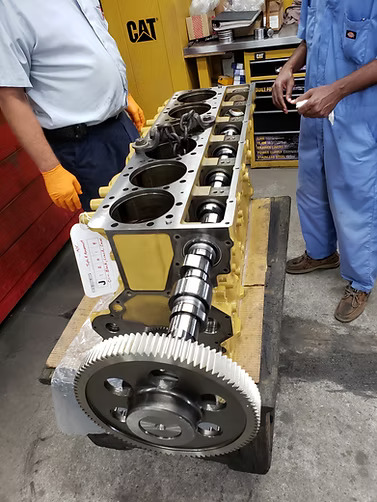
The engine block is the foundation of the entire assembly. Cracks typically form around cylinder bores, coolant passages, and main bearing saddles, often as a result of overheating, freeze damage, or prior mechanical failure. Installing a cracked block and building an engine around it is one of the most costly mistakes in diesel engine rebuilding.
Cylinder Head Crack Detection
Cylinder heads are among the most crack-prone components in a diesel engine. They cycle between extreme heat during combustion and cooler temperatures when the engine is off. Cracks most commonly appear between valve seats, around injector bores, and in the combustion chamber face. Cylinder head crack detection catches these before a new head gasket and valve job are wasted on a compromised part. Once a head passes crack detection, it should also go through pressure testing before engine reassembly.
Crankshafts and Connecting Rods
Crankshafts develop cracks at the journal-web fillet under torsional stress. Connecting rods are subject to both tension and compression on every stroke and can develop fatigue cracks at the beam or around the big end bore. Both components require magnaflux testing before any machining work is performed.
When Magnaflux Testing Should Be Performed
Timing matters. Testing at the wrong point in the process wastes time and can produce misleading results.
Before Any Machine Work Begins
Testing should happen after cleaning and before any grinding, boring, or resurfacing. There is no point investing machine time in a component that will be condemned after the fact. Inspection first, machining second.
After Overheating or Hydraulic Lock Events
Any engine that has suffered a severe overheating episode or ingested liquid should have all major components tested without exception. These events generate stress spikes that are known to initiate cracks in areas that were previously sound.
On Any Used Core Before Rebuilding
A used engine core with unknown history is a risk. Magnaflux testing on the block, heads, crank, and rods before any rebuild work begins is the only way to confirm the core is worth the investment.
What Happens If You Skip This Step
Shops that skip magnaflux testing are not saving time. They are transferring risk directly to the customer, and the cost of that shortcut is always higher than the inspection itself.
Wasted Machine Work and Labor Costs
A cylinder head that goes through a full valve job, surface resurfacing, and reassembly before a crack is discovered has already cost hundreds in labor. That work cannot be recovered. Catching the crack before machining eliminates that cost entirely. For a full breakdown of what cylinder head repair involves at a machine shop level, see our post on cylinder head repair in South Florida.
Repeat Engine Failures After Rebuild
A cracked component installed in a rebuilt engine will eventually fail. When it does, it typically damages everything around it. The result is a second rebuild, a warranty dispute, and a customer who never returns.
Magnaflux Crack Detection in South Florida: What to Look for in a Machine Shop
Not every shop that offers magnaflux testing performs it at the same standard. There are specific things to look for when choosing who handles this work.
Equipment and Technician Qualifications
A proper magnaflux setup includes a stationary wet bench for batch inspection and portable yoke equipment for field checks. Technicians should have documented training in non-destructive testing. The difference between a trained technician and someone following a basic procedure is the ability to recognize subtle indications and make accurate condemn-or-pass decisions.
Why Motor Service Group Performs This on Every Engine
Motor Service Group has performed diesel engine machine shop work in Miami since 1949. Magnaflux testing is not an add-on service. It is a standard part of the inspection process on every engine component that comes through the shop. Blocks, heads, crankshafts, and connecting rods are all tested before any machining begins. That standard has not changed in over 75 years of operation. To understand the full scope of what machine shop support covers for diesel engine repair, read our post on when diesel engine repair needs machine shop support.
Quick Answers
Q. Is Magnaflux Testing the Same as Magnetic Particle Inspection?
Yes. Magnaflux is a brand name that has become the common term for magnetic particle inspection in the automotive and diesel engine industries. The process and principles are the same.
Q. Can Magnaflux Detect Cracks in Aluminum Components?
No. Magnetic particle inspection only works on ferrous materials that can be magnetized. Aluminum components such as some cylinder heads require dye penetrant testing instead, which uses a colored dye to reveal surface cracks.
Q. How Long Does a Magnaflux Inspection Take?
A single component typically takes 30 to 60 minutes depending on its size and complexity. A full set of engine components can be inspected within a day in a shop equipped for batch processing.
Q. Does Every Engine Rebuild Require Magnaflux Testing?
Any rebuild using used or high-mileage components should include magnaflux testing. For diesel engines operating under heavy load, it is standard practice regardless of the component’s apparent condition.
Q. What Happens if a Crack Is Found?
The component is condemned and removed from the build. Depending on the location and severity of the crack, repair may be possible through welding or stitching, but that decision is made by the technician after a full evaluation. In most cases, replacement is the correct path.
Contact Motor Service Group for Magnaflux Crack Detection in South Florida
If you are rebuilding a diesel engine and need crack detection done right, do not skip this step.
Contact Motor Service Group today for magnaflux testing, precision inspection, and component machining. Our Miami machine shop supports diesel engine work across South Florida with accurate results you can rely on before reassembly.