

A crankshaft can come back from the machine shop ground, polished, and measured to perfect tolerance, and still fail within hours of the engine running again. The shaft was not the problem. What happened during reassembly was. This post covers what can go wrong during installation after a proper repair, why bearing clearance is the detail that makes or breaks the rebuild, and how fleet and marine operators in Miami can protect the work they already paid for.
A Good Grind Is Only Half the Story
What a Quality Crankshaft Repair Actually Delivers
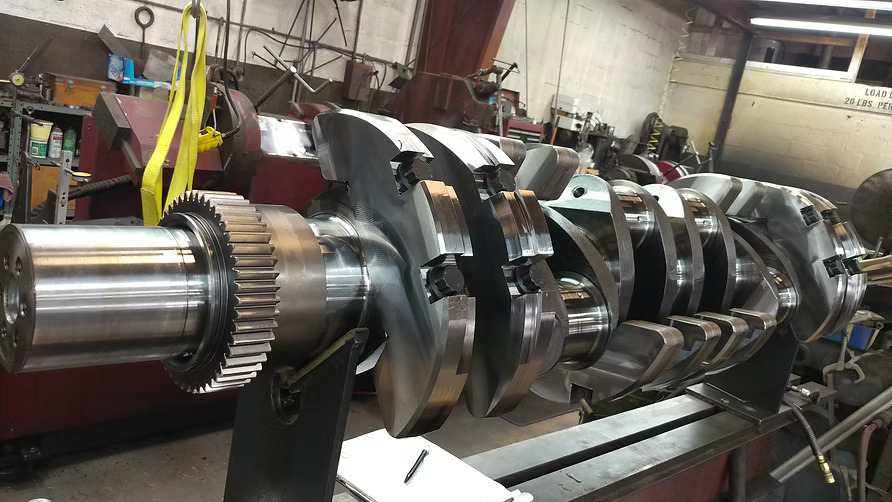
A proper job restores journal geometry, corrects surface finish, and brings every dimension back within OEM specification. The shaft leaves the shop round, straight, and ready to support a long service life under the right conditions.
Why the Crankshaft Leaving the Shop Is Not the Final Step
The work done at the machine shop only sets up the conditions for success. Everything corrected there has to be matched correctly during reassembly, or the precision built into the shaft never gets the chance to matter.
The Gap Between Machine Shop Precision and Installation Accuracy
A crankshaft ground to a tolerance of a few thousandths of an inch can be undone by a bearing that is the wrong size, a cap installed backward, or a torque value that was eyeballed instead of measured. The gap between shop precision and installation accuracy is where many rebuilds quietly go wrong.
How Crankshaft Installation Can Undo a Good Repair
Incorrect Bearing Selection for a Ground or Polished Crankshaft
If the shaft was ground to an undersize dimension, it needs bearings made for that exact undersize. Installing standard bearings on a ground shaft, or undersize bearings on a polished crankshaft that was not reduced in diameter, creates a clearance problem from the moment the engine starts.
Reversed or Misplaced Bearing Halves and Oil Holes
Bearing halves are not interchangeable. A half without an oil hole installed where the hole is needed blocks lubrication to that journal entirely. A cap installed in the wrong position or rotated from its original orientation can also throw off alignment and clearance.
Improper Torque on Main Caps and Connecting Rod Bolts
Main cap and rod bolt torque has to be applied in the correct sequence and to the correct value, often in stages. Under-torqued fasteners allow movement under load. Over-torqued fasteners can distort the bore enough to change clearance even when the part itself is correct.
Misalignment During Crankshaft Installation
If the shaft is not seated evenly across all main bearings, it ends up fighting the engine every time it rotates. Journals load unevenly, the gap varies from one side to the other, and the crankshaft experiences stress it was never designed to absorb.
Bearing Clearance: The Number That Decides Everything
What Bearing Clearance Actually Means
This clearance is the small gap between the crankshaft journal and the bearing surface, measured in thousandths of an inch. This is where the oil film forms and supports the rotating assembly. Every other step in a crankshaft job exists to make this number correct.
Why Clearance Has to Match the Crankshaft’s Actual Dimensions
This number is not fixed. It depends on the actual journal diameter after grinding or polishing, matched against the actual bearing dimension. A repair report and a bearing spec sheet both matter here, and the final figure has to be measured, not assumed.
What Happens When Clearance Is Too Tight
If the gap is too small, there is not enough room for the oil film to form properly. Metal can contact metal directly, generating heat and friction that the bearing material cannot survive for long.
What Happens When Clearance Is Too Loose
If the gap is too large, the oil film cannot maintain consistent pressure. Oil pressure drops, the shaft moves more than it should within the bearing, and the resulting impact loading accelerates wear on both the journal and the bearing surface.
How a Crankshaft Repair Can Fail Within Hours of Reassembly
Oil Film Breakdown and What It Looks Like
When the gap is wrong in either direction, the oil film that should separate the journal from the bearing breaks down. This is often the first event in a chain that leads to bearing wipe, journal damage, and in severe cases a connecting rod failure.
Bearing Wipe and How Fast It Can Happen
Bearing wipe occurs when the journal makes direct contact with the bearing surface because the oil film has been penetrated. Friction generates heat quickly, the material softens and smears, and the damage can progress from first contact to a seized part in a short amount of running time.
Why the Damage Often Looks Like a Crankshaft Problem
When a bearing wipes and a journal gets damaged, the visible result is often blamed on the shaft itself. In many cases, the crankshaft was correct when it left the shop, and the failure traces back to a clearance or installation issue introduced during reassembly.
Verification Steps That Protect a Crankshaft Repair During Reassembly
Confirming Bearing Size Matches the Ground or Polished Dimension
Before installation, the bearing set should be checked against the actual journal measurements from the repair report. This confirms the parts ordered match the crankshaft that came back from the shop, not just the engine model in general.
Checking Oil Hole Alignment Before Final Assembly
Every bearing half with an oil hole should be confirmed in its correct position before the caps are torqued down. This is a quick check that prevents a lubrication failure that would otherwise go unnoticed until the engine is running.
Measuring Clearance Before the Engine Runs
Plastigauge or direct measurement should confirm the actual gap after the crankshaft is installed and before the engine is started. This step catches problems while they can still be corrected, rather than after the engine has already run on an incorrect figure.
Torque Sequence and Why It Cannot Be Approximate
Main caps and rod bolts should be torqued in the sequence and to the values specified for the engine, using a calibrated torque wrench. This step protects bore geometry and keeps the gap consistent across every journal.
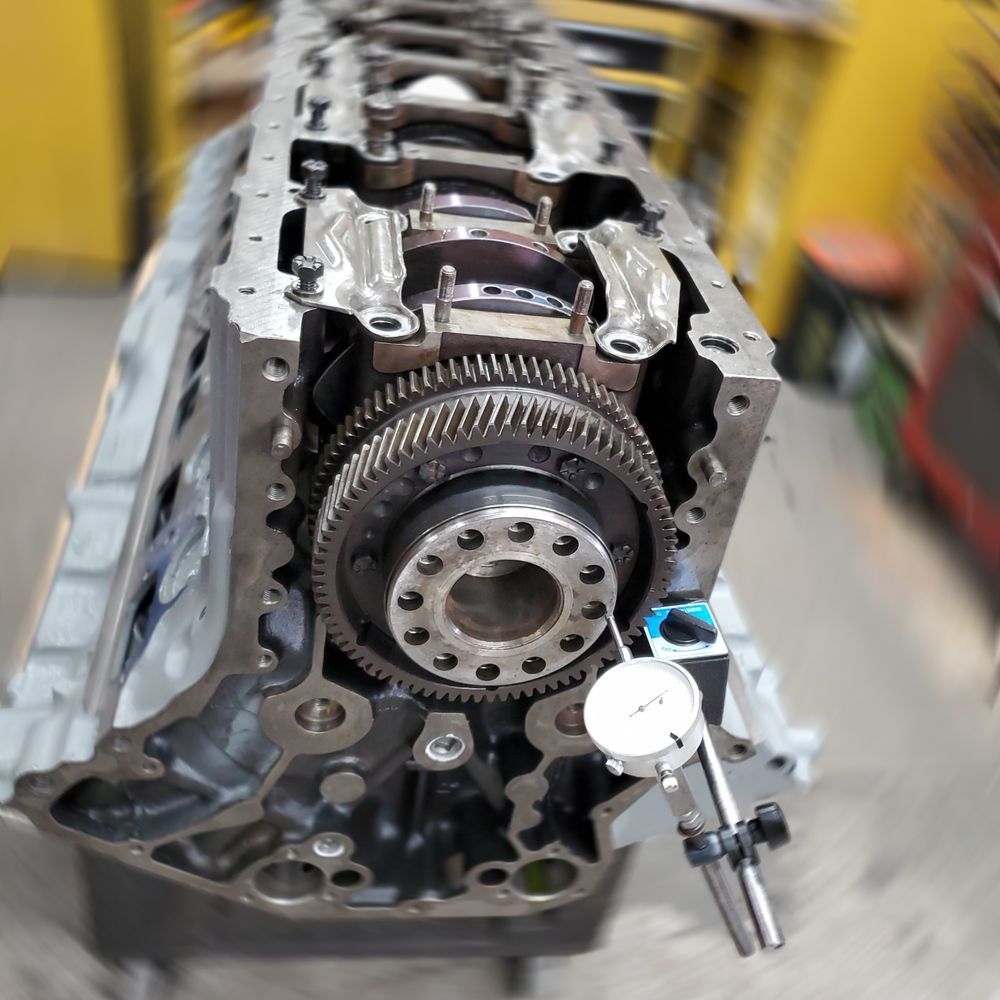
Crankshaft Installation in a Diesel Engine: What a Careful Reassembly Looks Like
Why Reassembly Should Be Treated as Part of the Repair, Not a Separate Step
A crankshaft job and the reassembly that follows are two halves of the same outcome. Treating reassembly as a routine bolt-together step, separate from the precision work done at the machine shop, is where good work gets undone.
Documentation That Confirms Clearance Before the Engine Is Closed Up
Readings taken during reassembly should be recorded alongside the original measurements from the shop. This creates a complete record showing the shaft was correct leaving the shop and correct again going back into the engine.
Bearing Clearance and Crankshaft Repairs Miami: What Motor Service Group Verifies
How Motor Service Group Approaches Crankshaft Repairs and Reassembly Support
Motor Service Group has performed crankshaft repairs in Miami since 1949. Every shaft that leaves the shop comes with the journal measurements needed to select the correct bearing set and confirm the proper gap during reassembly, whether that work happens in-house or at a customer’s facility.
Working With Repair Shops and Fleet Teams During Installation
The team supports repair shops, fleet maintenance teams, and marine operators across Miami-Dade, Broward, and Palm Beach counties with the measurements and guidance needed to verify bearing clearance before an engine is closed up, protecting the precision built into every job.
Quick Answers
Q: Can a properly ground crankshaft still fail after reassembly?
Yes. A shaft that was measured and machined correctly can still fail if the wrong bearings are installed, oil holes are misaligned, or the gap is not verified before the engine runs.
Q: What is bearing clearance and why does it matter so much?
It is the gap between the journal and the bearing surface where the oil film forms. If this gap is wrong in either direction, the film cannot do its job and the parts will wear or fail.
Q: What are common installation mistakes that damage a good crankshaft repair?
Installing the wrong bearing size for a ground or polished shaft, reversing or misplacing bearing halves, misaligning oil holes, and applying incorrect torque to main caps or rod bolts are among the most common.
Q: How quickly can incorrect bearing clearance cause failure?
Bearing wipe from an incorrect gap can progress from first contact to significant damage within a short amount of running time, sometimes within hours of the engine starting.
Q: Does Motor Service Group help verify clearance during reassembly?
Yes. Motor Service Group provides journal measurements with every crankshaft job and supports repair shops and fleet teams in confirming bearing clearance before reassembly is complete.
Protect the Repair
Motor Service Group performs precision crankshaft repairs in Miami and helps fleet and marine teams verify bearing clearance during reassembly so the work holds up. Contact our expert team today to discuss your crankshaft and reassembly verification.