

Quick answer: A flooded diesel engine can often be saved if nobody cranks it, the water is removed quickly, and the internal parts are measured and crack-tested before it runs again. Saltwater, long soak times, and attempts to start the engine with water in the cylinders raise the odds of a full rebuild or scrap. The decision comes from inspection and measurement, not from how clean the engine looks on the outside.
South Florida sees storm surge, king-tide flooding, swamped marina slips, and water-logged equipment yards almost every year. When a diesel engine in a boat, generator, truck, or piece of heavy equipment goes under, the first few decisions decide whether you are facing a cleanup, a rebuild, or a replacement. This guide explains what happens inside a flooded engine, what to do in the first 24 hours, and how a diesel engine machine shop in Miami decides between salvage and scrap.
What Happens Inside a Flooded Diesel Engine
Water does not compress. A diesel engine runs very high compression, so there is almost no spare room in the cylinder at the top of the piston stroke. If water gets into a cylinder through the air intake, the exhaust, or an open injector bore and someone turns the engine over, the piston has nowhere to go. That is hydrolock, and it can bend connecting rods, crack pistons, and damage the crankshaft or block.
Even when the engine never locks up, water starts a second problem: corrosion. Saltwater leaves salt deposits and begins attacking cylinder walls, valve seats, and bearing surfaces. Marine technicians commonly warn that after about 24 hours of soaking, corrosion may already have started inside the cylinders, and it speeds up once the engine is exposed to air.
First 24 Hours: What to Do (and What Not to Do)
- Do not crank or start it. Starting a flooded engine is how water gets pulled into the cylinders. This is the most important rule.
- Disconnect the battery to protect the electrical system and prevent accidental starts.
- Photograph everything and call your insurer before touching anything. Waterlines, fluid levels, and equipment condition all matter for a claim.
- Check the oil and coolant. Milky, gray, or over-full oil means water has entered the crankcase. Check fuel tanks, filters, and water separators too. For more on mixed fluids, see oil in coolant: how a machine shop finds the real cause.
- Drain contaminated fluids. Water-contaminated oil and fuel should be drained and replaced, and filters changed, before the engine is ever started.
- Have the engine barred over by hand with the injectors removed. This shows whether it turns freely and lets water escape from the cylinders. If it resists, stop.
- Get it to a diesel machine shop before it is reassembled or run. Hours matter more than days.
General guidance only. Follow your engine manufacturer’s flood procedure, and call a qualified technician for any engine that does not turn freely.
Saltwater vs. Freshwater vs. Contaminated Floodwater
| Type of water | Main risk | What to expect |
| Freshwater, short exposure | Rust starts if water sits; oil and fuel contamination | Often cleanable if caught fast |
| Saltwater, short exposure | Salt deposits and corrosion begin quickly | Full flush and internal inspection needed |
| Saltwater, days of exposure | Pitted cylinder walls, journals, and valve seats | Frequently a rebuild |
| Silty or sewage-contaminated floodwater | Abrasive silt in oil passages and bearings | Complete teardown and cleaning |
What a Diesel Machine Shop Inspects on a Flooded Engine
Once the engine is torn down and cleaned to remove salt and silt, every critical component is measured. At Motor Service Group, that work stays under one roof:
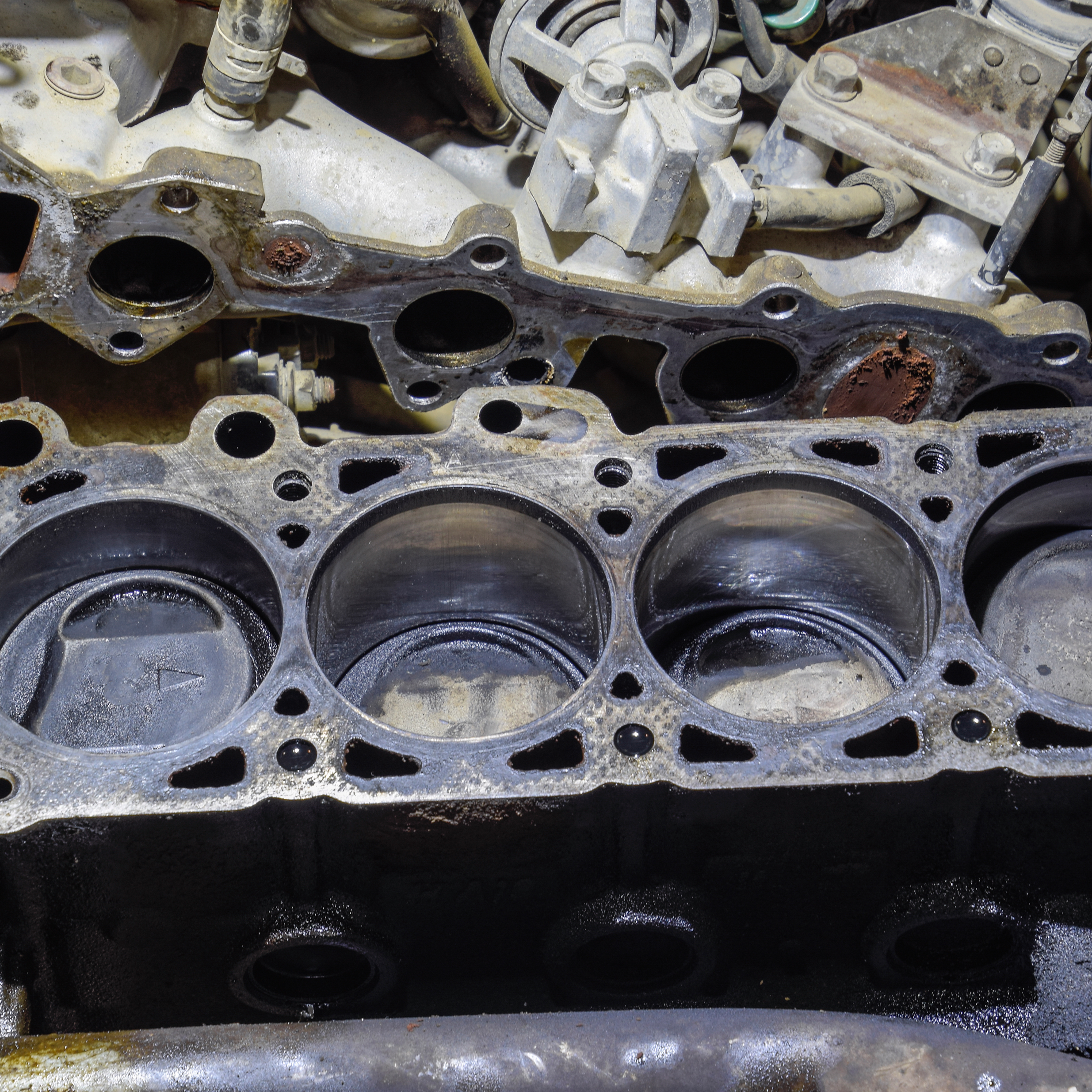
- Cylinder bores and liners. Rust pitting, taper, and out-of-round wear decide whether the block needs honing, boring, or sleeving. See our engine block machining services and what drives block machining cost.
- Connecting rods. Hydrolock can bend rods. We check straightness and bore size, and repair bushings through our connecting rod service.
- Crankshaft. Journals are checked for pitting, runout, and straightness before any grinding is decided. Learn more on our crankshaft services page.
- Head and block integrity. Magnaflux crack detection and pressure testing find cracks the eye cannot see.
- Valves, seats, and guides. Corroded sealing surfaces cause compression loss later. Our cylinder head service restores them to spec.
Salvage, Rebuild, or Scrap? How the Decision Gets Made
| What the inspection finds | Likely path |
| Engine turns freely, oil is clean, no corrosion in the bores | Clean, replace seals and bearings, reassemble (salvage) |
| Light surface rust; crank and bores within spec | Hone and machine as needed, new bearings and rings (rebuild) |
| Pitted cylinder walls or liners | Bore and sleeve, or replace liners |
| Bent rods, cracked head or block, or crankshaft beyond grind limits | Replace the part, or scrap if repair cost exceeds the engine’s value |
A good shop tells you when scrap is the honest answer. We give a written estimate only after cleaning, measuring, and crack testing, so the number reflects the real condition of the engine. To understand how long jobs take, read how to plan around a diesel machine shop’s turnaround time.
Marine, Generator, and Fleet Engines: What’s Different
- Marine engines. Water can enter through the exhaust if the system is not installed correctly, siphons back, or floods during a storm. Our guide to marine diesel engine machining in Miami explains how marine applications differ.
- Standby generators. Ground-level generators are often the first to flood. After a storm, they need inspection before they are trusted as backup power again.
- Trucks and heavy equipment. Yard flooding can submerge crankcase breathers and intakes. Check the oil level first; a dipstick reading that is higher than normal is a warning sign.
Why Miami Owners Bring Flooded Engines to Motor Service Group
Motor Service Group has been a diesel engine machine shop in Miami since 1949. Cleaning, crack detection, pressure testing, block work, head work, crankshaft grinding, and rod repair are all done in-house, so there is no waiting on outside vendors. We serve customers across Miami-Dade, Broward, and Palm Beach, including Doral, Hialeah, and Medley. Not sure what happens after you bring an engine in? Read what happens after you drop off the engine.
Have a flooded diesel engine? Call 1(305) 592-2440 or request a free estimate. Our shop is at 6600 NW 77th Court, Miami, FL 33166, open Monday to Friday, 5:30 am to 2:00 pm.
Frequently Asked Questions
Can a flooded diesel engine be saved?
Often yes, if it was not cranked, the water is cleared quickly, and the inspection shows no bent rods, cracks, or deep corrosion. Saltwater and long soak times lower the odds. Only measurement after teardown can confirm.
Should I try to start a flooded diesel engine?
No. Starting it can draw water into the cylinders and cause hydrolock, which can bend rods and damage the block or crankshaft. Have it inspected first.
What is hydrolock in a diesel engine?
Hydrolock happens when liquid fills a cylinder and the piston cannot finish its stroke, because liquid does not compress. The result can be bent or broken connecting rods, cracked pistons, and other internal damage.
How long can a diesel engine sit in saltwater before it is ruined?
There is no safe window. Corrosion can begin within hours, and technicians commonly treat anything beyond about 24 hours as high risk. Faster inspection means better odds.
Does insurance cover a flooded engine?
It depends on your policy, and flood coverage is often separate from standard coverage. Document the damage with photos and contact your insurer before repairs. We are not insurance advisors.
How much does flooded diesel engine repair cost in Miami?
The cost depends on how far the damage goes and which parts need machining or replacement. We provide a written estimate after inspection. See what drives engine block machining cost for the pricing factors.