

Most people send a diesel engine in for repair without knowing what actually happens once it reaches the shop. The difference between an engine that holds up for thousands of hours and one that fails within months often comes down to what was done during the reparation process and how accurately it was executed.
This guide walks through each stage of diesel motor reparation and explains why the quality of work at every step determines the final outcome.
What Diesel Motor Reparation Actually Means
Repair vs Reparation
A basic repair replaces a broken part. Reparation goes further. It restores the engine’s internal geometry, surface conditions, and tolerances to factory specification so that new and existing components function correctly together.
Without reparation, even new parts are installed on compromised surfaces, one of the most common causes of repeat diesel engine failures.
Why Diesel Engines Require Specialized Machine Shop Work
Diesel engines operate under extreme cylinder pressure, continuous load cycles, and high heat. These conditions demand exact tolerances throughout the block, head, crankshaft, and connecting rods. Standard repair shops are not equipped to measure, machine, or verify these tolerances. A diesel engine machine shop uses specialized industrial equipment and controlled processes to restore each component to the accuracy the engine requires.
Stage 1: Disassembly and Initial Inspection
What Gets Checked Before Any Machining Begins
Before any work starts, the engine is fully disassembled and each component is inspected individually. The technician checks for:
- Cylinder bore wear and out-of-round conditions
- Deck surface flatness on the block and head
- Crankshaft journal diameter and surface condition
- Connecting rod alignment and bore size
- Visible cracks, scoring, or corrosion on all castings
This stage establishes the full scope of work required and prevents surprises mid-repair.
How Hidden Damage Gets Identified Early
Visual inspection alone is not enough. Many cracks and structural flaws are not visible to the naked eye, particularly on cylinder heads and crankshafts that have been operating under heavy load. Specialized detection methods are required to identify damage before it causes a failed rebuild.
Why Skipping Inspection Leads to Repeat Failures
Shops that skip thorough inspection install parts on components that appear serviceable but are not. The engine comes back with the same or worse problems shortly after. A complete inspection is the foundation of every reliable diesel engine repair.
Stage 2: Component Assessment and Crack Detection
Magnaflux Crack Detection and Why It Matters
Magnaflux crack detection uses magnetic particle inspection to identify cracks in ferrous components. It reveals structural flaws in cylinder heads, crankshafts, engine blocks, and connecting rods that would otherwise go undetected.
A component with an undetected crack will fail under load regardless of how well the rest of the engine is rebuilt. Crack detection is not optional in a thorough diesel motor reparation process.
Motor Service Group performs magnaflux crack detection on all engine components as part of every reparation process, before any machining begins.
Pressure Testing for Cylinder Heads and Blocks
Pressure testing verifies that cooling passages and combustion chambers are sealed correctly. A cylinder head that passes visual inspection may still have internal leaks that cause overheating, coolant loss, or combustion gas contamination.
Testing before machining confirms the component is worth repairing. Testing after reassembly confirms the work was done correctly.
How Assessment Results Guide the Repair Plan
Once inspection and testing are complete, the technician has a clear picture of what each component requires. Some can be machined back to spec. Others have damage beyond safe machining limits and need replacement. This decision is made based on measurement, not assumption.
Stage 3: Precision Machining of Key Engine Components
Cylinder Head Resurfacing and Valve Work
The cylinder head sealing surface must be flat within tight tolerances for the head gasket to seal correctly. Warpage from heat cycles is common, particularly on high-hour engines. Resurfacing removes the distortion and restores a flat, controlled surface.
Valve seats and guides are inspected, machined, or replaced as needed to restore correct valve sealing and combustion chamber geometry.
Engine Block Cleaning, Measurement, and Preparation
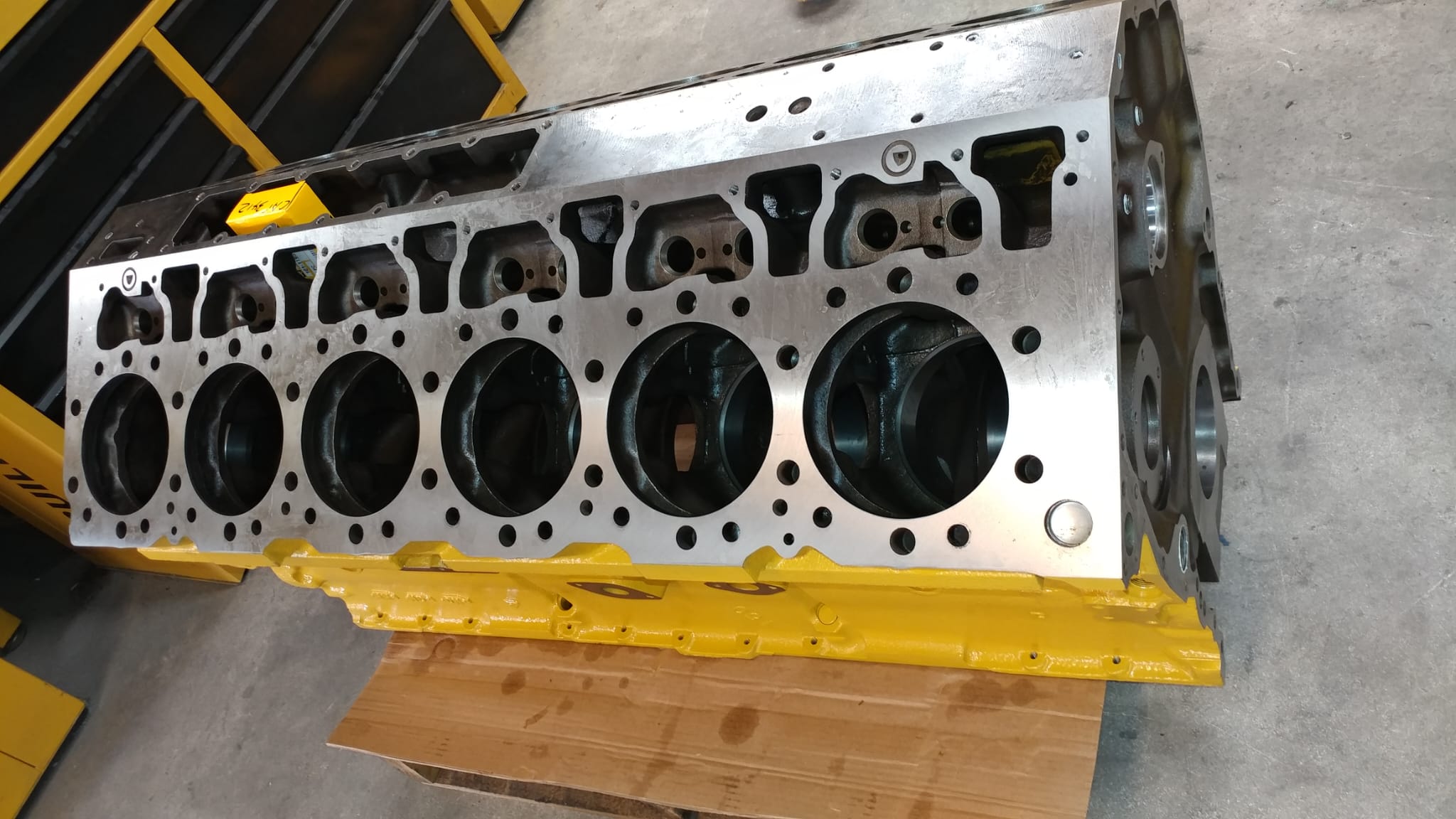
The block is cleaned to remove scale, carbon deposits, and contamination from oil and coolant passages. After cleaning, bore diameter, main bearing alignment, and deck surface condition are measured against OEM specifications.
Cylinders outside tolerance are bored and honed to the correct oversize dimension. Deck surfaces are resurfaced when needed. Main bores are align-bored when misalignment is detected.
For a closer look at when cylinder sleeving is required alongside block machining, read our guide on engine block sleeving and permanent diesel repair.
Crankshaft Grinding and Bearing Clearance Restoration
Crankshaft journals wear over time, producing out-of-round surfaces and incorrect bearing clearances. Crankshaft grinding restores the journal surface to the correct diameter and finish, allowing new bearings to seat properly and maintain oil film under load.
Correct bearing clearance is one of the most critical tolerances in a diesel engine. Too tight or too loose, and the engine loses oil pressure, accelerates wear, and fails prematurely.
Connecting Rod Reconditioning
Connecting rods are measured for straightness, twist, and bore size. Worn small-end bushings are replaced. The big-end bore is reconditioned to restore correct bearing fit. Each rod is polished and verified to factory specification before reassembly.
A connecting rod that is out of spec transmits uneven load through the piston and crankshaft, causing accelerated wear throughout the lower end of the engine. For a full breakdown of what rod reconditioning involves, read our guide on connecting rod polishing and bushing replacement.
Stage 4: Reassembly and Quality Verification
Why Reassembly Sequence and Torque Specs Matter
Reassembly is not simply putting parts back together. Each fastener is torqued to specification in the correct sequence. Gaskets and seals are installed to manufacturer requirements. Clearances are verified at each stage before the next component goes in.
An engine assembled without proper torque sequencing or clearance verification will develop leaks, lose compression, or fail bearings early.
Final Inspection Before the Engine Leaves the Shop
Before the engine is released, a final check confirms that all measurements are within tolerance, all passages are clear, and all components are correctly installed. Documentation of the work performed and the tolerances achieved accompanies the engine.
Not every shop operates this way. At a professional diesel engine machine shop, it is the standard.
What Separates a Precision Shop From a Basic Repair Shop
Equipment, Measurement Standards, and Technician Experience
A professional diesel engine repair shop operates with equipment capable of measuring and machining to thousandths of an inch. Technicians carry direct experience with heavy-duty diesel platforms across marine, fleet, construction, and industrial applications.
The results reflect it. Engines rebuilt to correct tolerances hold oil pressure, maintain compression, and deliver consistent service hours. Those repaired without that standard tend to return.
Documentation and Accountability
Every measurement taken, every component machined, and every tolerance verified should be documented. This creates accountability and gives the customer confidence that the work was done correctly. Shops that cannot provide this are not operating to a professional standard.
How Motor Service Group Supports Diesel Engine Reparation in Miami
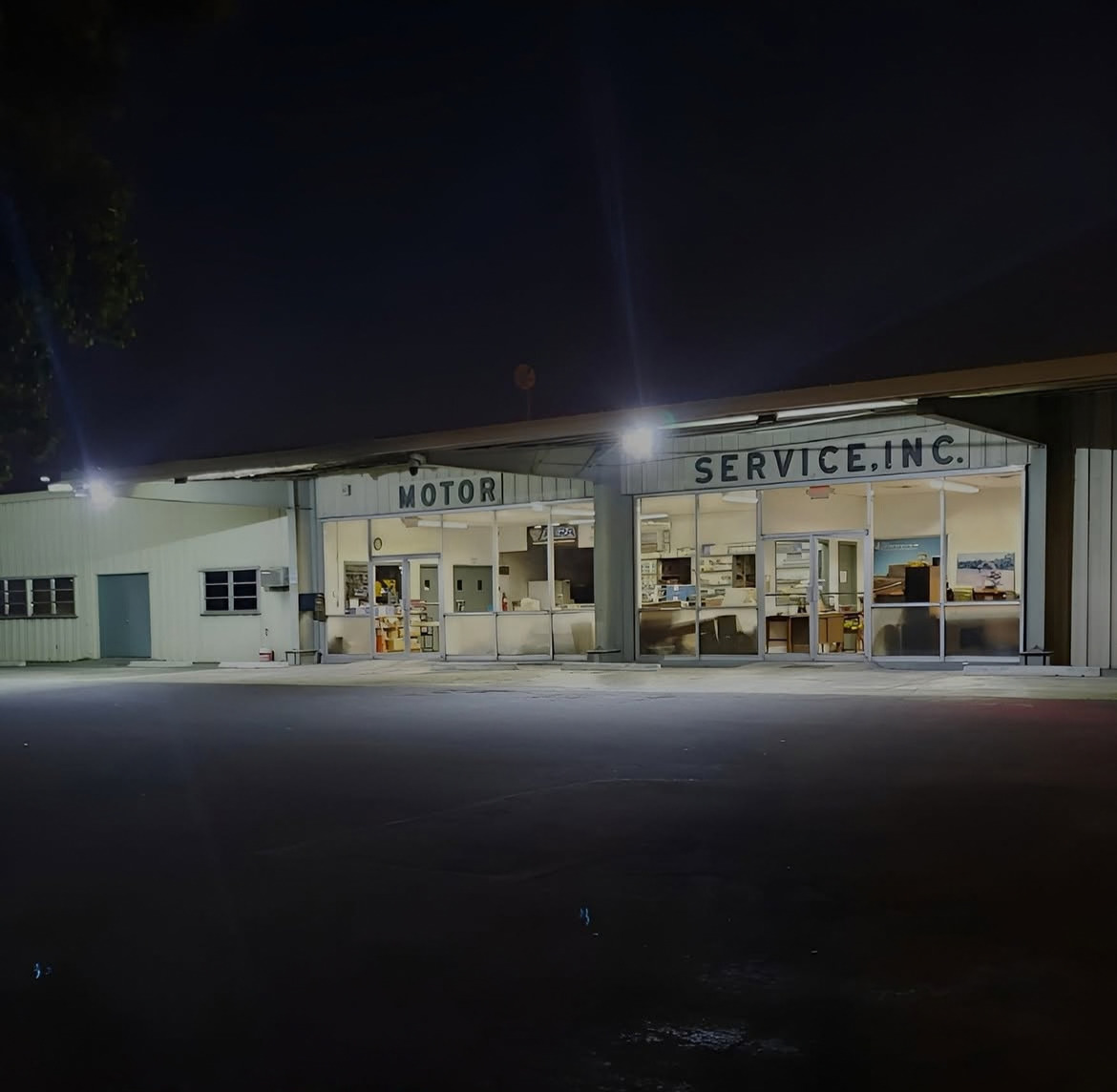
Motor Service Group has been performing diesel engine repair in Miami since 1949. The shop serves marine repair companies, fleet operators, heavy equipment contractors, and industrial facilities across Miami-Dade, Broward, and Palm Beach counties.
Services include:
- Magnaflux crack detection on heads, blocks, crankshafts, and rods
- Cylinder head pressure testing and resurfacing
- Engine block machining, sleeving, and align boring
- Crankshaft grinding and polishing
- Connecting rod reconditioning and bushing replacement
- Complete diesel engine inspection and reparation support
Quick Answers
Q: What does diesel motor reparation involve?
Full disassembly, inspection, crack detection, precision machining of the block, head, crankshaft, and connecting rods, followed by reassembly to factory tolerances. It is a complete mechanical restoration, not a parts swap.
Q: How do I know if my diesel engine needs reparation or replacement?
A thorough inspection and measurement by a qualified machine shop will determine whether components can be machined back to spec or have damage beyond safe repair limits. Most heavy-duty diesel engines can be successfully rebuilt when assessed before failure progresses too far.
Q: What is magnaflux crack detection and why is it important?
It is a magnetic particle inspection method that reveals cracks in engine components not visible to the naked eye. Skipping it risks rebuilding an engine around a cracked component that will fail under load.
Q: How long does a diesel engine repair take at a machine shop?
Turnaround depends on the extent of damage, the components requiring machining, and parts availability. Accurate work cannot be rushed, controlled measurement and machining take the time they require.
Q: Why choose Motor Service Group for diesel engine repair in Miami?
Over 75 years of experience, advanced machining equipment, and a team with direct knowledge of marine, fleet, and heavy equipment diesel platforms across South Florida.
Work With Miami’s Precision Diesel Engine Machine Shop
Motor Service Group is a diesel engine machine shop in Miami specializing in precision machining, inspection, and repair of critical diesel engine components.
If your engine requires reparation, schedule a professional inspection with Motor Service Group today.