

Repeat engine failures are one of the most expensive problems in mining and heavy industrial fleets. When a diesel engine returns to service and fails again, the issue is rarely “bad parts” or bad luck. In most cases, the same root causes were never corrected.
This guide breaks down repeat engine failures, explains why diesel engines fail repeatedly, and highlights the most common diesel engine failure causes that machine shops and fleet maintenance teams must address to prevent a second breakdown.
For operations where uptime matters, the goal is simple: stop rebuilding symptoms and start fixing failure mechanisms.
Why Diesel Engines Fail Repeatedly in Mining and Heavy Industrial Applications
Diesel engines in heavy equipment operate under continuous duty cycles, high loads, heat, vibration, and contamination exposure. Those conditions magnify small errors.
Operating conditions that accelerate wear
- High cylinder pressures and thermal cycling
- Dust, moisture, and abrasive environments
- Long run times with limited maintenance windows
- Fuel quality variation and filtration stress
Why symptom-based repairs lead to repeat engine failures
Many “rebuilds” replace visible damage without restoring geometry, cleanliness, and correct tolerances. The engine may run, but it runs with:
- poor sealing and blow-by
- unstable lubrication films
- misalignment load paths
- contamination still circulating in the system
That is why the same engine fails again, often faster than the first time.
The Most Common Diesel Engine Failure Causes Behind Repeat Breakdowns
Most repeat failures fall into a few predictable categories. If you want to reduce recurrence, these are the areas that must be controlled.
Machining and geometry-related failures
- out-of-round bores, taper, or incorrect surface finish
- deck surfaces not flat or not finished correctly
- main bore alignment issues (line bore/align bore not corrected)
- crankshaft journal problems (wear, taper, runout)
Contamination-related failures
- metallic debris from the first failure not fully removed
- coolant intrusion or fuel dilution in oil
- poor cleaning of oil galleries and components
Assembly and inspection gaps
- insufficient measurement and documentation
- overlooked cracks, porosity, or sealing defects
- missing pressure testing or crack detection steps
No root cause analysis
If the “why” is not identified, corrective actions are incomplete and the second failure is only a matter of time.
Why Rebuilding a Diesel Engine Without Proper Machining Guarantees Failure
A rebuild is not the same as a precision-machined repair. Replacing parts without restoring geometry and tolerances is one of the most common paths to repeat failure.
The difference between rebuilding and machining
- Rebuilding replaces worn components
- Machining restores critical dimensions, alignment, and surfaces so the engine can carry load correctly
Engine block machining and bore geometry
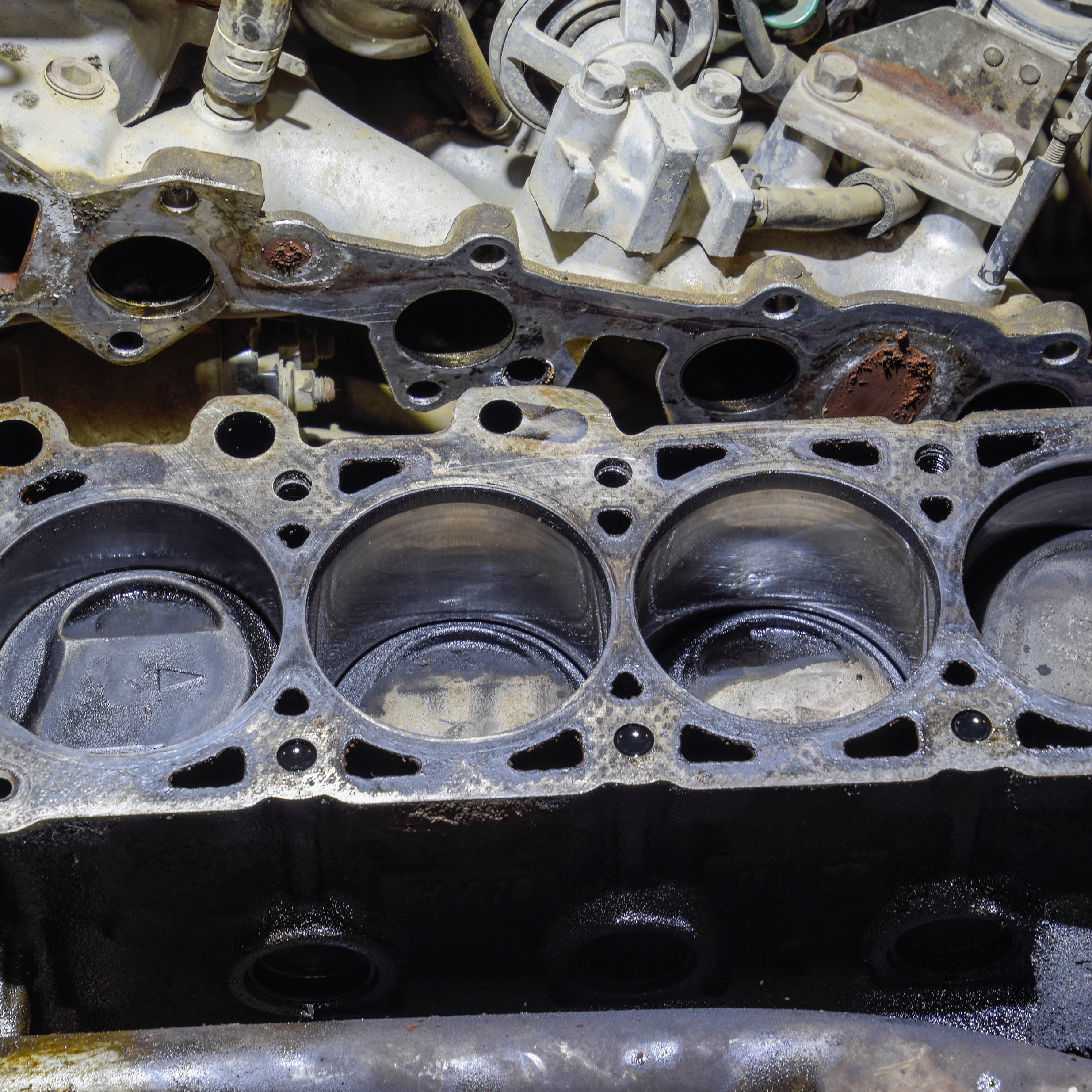
If the cylinder bores are not corrected, ring sealing becomes unstable. That leads to blow-by, oil consumption, heat, and accelerated wear. Sleeving, boring, honing, and alignboring need to match the engine’s requirements, not “close enough.”
Cylinder head machining and sealing surfaces
Deck flatness, valve seat integrity, guide condition, and surface finish all affect compression and combustion stability. If the head is not machined and verified properly, gasket failures and coolant intrusion become repeat patterns.
Crankshaft and connecting rod machining accuracy
Crankshaft journal condition, fillet integrity, and proper grinding and polishing influence bearing life. Connecting rods require bushing replacement and machining that maintains correct bore geometry and alignment.
Internal link slot (use descriptive anchor text):
- engine block machining services
- cylinder head inspection and machining
- crankshaft grinding and polishing
Hidden Geometry Problems That Cause Repeat Engine Failures
The most damaging issues are often invisible without measurement.
Out-of-round cylinder bores
Even small deviations change ring contact and oil control. The result is scuffing, hot spots, and rapid wear.
Improper deck surface flatness
If the deck is not flat or the surface finish is wrong, sealing becomes unreliable. Head gasket failures often repeat because the surface problem was never fixed.
Main bore and crankshaft alignment issues
Misalignment increases localized bearing load and reduces oil film thickness. That leads to bearing wiping, spun bearings, and journal damage.
How small geometry errors cause major failures
When multiple deviations stack up, loads concentrate in the wrong areas. The engine might pass a basic start-up test, but it fails under real duty cycle stress.
Contamination as the Silent Cause of Engine Death
Contamination is one of the most overlooked diesel engine failure causes, especially after a catastrophic failure.
Metal debris from previous failures
Metal particles circulate and destroy bearings, oil pumps, and journals. If galleries are not cleaned and flushed properly, the rebuilt engine starts with a built-in failure condition.
Oil and coolant contamination
Coolant intrusion breaks lubrication down fast. Fuel dilution reduces oil viscosity and accelerates wear across all moving surfaces.
Why improper component cleaning causes immediate damage
Component cleaning is not cosmetic. It is a reliability requirement. Professional cleaning processes prevent debris from re-entering oiling and cooling circuits.
The role of pressure testing and crack detection
Pressure testing confirms sealing integrity. Crack detection identifies defects that cause recurring leaks and structural failure under load.
Internal link slot:
Outbound authority link slot (add 2–3 when publishing):
- OEM or industry resource on contamination control
- Engineering reference on surface finish and sealing
- Reliability reference on root cause analysis
How Root Cause Analysis Prevents a Second Engine Failure
If you want repeat engine failures to stop, root cause analysis is not optional.
What root cause analysis means in engine repair
Root cause analysis identifies the failure mechanism, not just the broken part. Examples:
- why a bearing failed (oil starvation, misalignment, debris)
- why a gasket failed (surface finish, flatness, clamping, overheating)
- why a cylinder scuffed (oil control, cooling, geometry, load)
Diagnostic inspection versus visual inspection
A serious process includes measurement, documentation, pressure testing, and crack detection. Visual inspection alone misses the reasons engines fail repeatedly.
Using failure data to prevent recurrence
Wear patterns, debris analysis, and measured geometry should drive corrective machining and process changes. That is how you reduce recurrence across an entire fleet.
The Role of a Specialized Diesel Engine Machine Shop
Not every shop is equipped to prevent repeat failures in heavy-duty applications. The difference is process discipline and measurement.
Precision machining capabilities
- alignboring and surfacing done to spec
- crankshaft grinding and polishing with verified geometry
- rod bushing replacement and machining with controlled tolerances
Inspection, cleaning, and crack detection
- pressure testing for leak verification
- magnaflux for crack detection
- professional component cleaning to remove failure debris
Experience with heavy-duty diesel applications
Heavy industrial engines demand precision and consistency. A machine shop that works at this level supports uptime and cost control.
Preventing Repeat Engine Failures in Heavy Equipment and Industrial Fleets
Use this short checklist to reduce repeat failures:
- Require machining verification, not assumptions
- Measure geometry on blocks, heads, crankshafts, and rods
- Treat contamination control as a rebuild requirement
- Pressure test and crack check critical components
- Document findings and perform root cause analysis before sign-off
Conclusion: Stop Rebuilding Symptoms and Fix the Root Causes
Repeat engine failures are usually predictable. When machining, geometry, contamination control, and root cause analysis are treated as required steps, reliability improves and second failures drop dramatically.If your fleet is dealing with recurring breakdowns, contact our team to discuss inspection, machining, cleaning, and technical services designed to prevent the next failure.