

Most diesel engine failures begin with a decline in performance. An engine loses power, develops unusual vibrations or struggles to maintain operating temperature. Diesel engine runaway presents an entirely different problem: the engine accelerates uncontrollably, potentially exceeding its designed operating speed.
For marine vessels, commercial fleets, industrial generators and heavy equipment, the consequences can be significant. A runaway incident may damage multiple internal components, interrupt critical operations and create serious safety hazards.
What makes this failure particularly concerning is that an engine may appear externally intact after the incident, despite having experienced extreme mechanical and thermal stress.
Understanding what causes diesel runaway and how professionals evaluate the resulting damage is essential when deciding whether an affected engine can be restored.
What is diesel engine runaway?
Diesel engine runaway is an uncontrolled increase in engine speed caused by excessive fueling or the combustion of an unintended fuel source, such as lubricating oil or combustible vapors entering the air intake.
When an engine begins consuming an alternative fuel source, conventional fuel delivery controls may no longer regulate its speed effectively. In other cases, faults within the fuel control or governing system can produce uncontrolled acceleration.
Unlike ordinary acceleration, a runaway condition is not necessarily responsive to operator commands.
The resulting overspeed can exceed the mechanical limits of pistons, connecting rods, crankshafts, valve train assemblies and other critical components.
What causes diesel runaway?
Several mechanical and environmental conditions can contribute to an uncontrolled engine overspeed event. Identifying the original cause is essential because replacing damaged parts alone may leave the engine vulnerable to another incident.
Turbocharger oil leakage
Turbochargers depend on a continuous supply of lubricating oil to support their rotating assemblies. When the turbocharger develops certain bearing, sealing or drainage problems, oil may enter the intake airflow.
Under severe conditions, the engine can begin consuming this oil as fuel. Engine speed may increase beyond the operator’s control.
A turbocharger failure does not always result in runaway, but significant oil accumulation in the intake system warrants immediate professional attention.
Excessive crankcase pressure
Internal engine wear can allow combustion gases to escape into the crankcase. This condition, commonly associated with blow-by, may increase crankcase pressure and contribute to oil carryover through certain ventilation system designs.
Worn piston rings and damaged cylinder surfaces can aggravate these conditions. An unexplained increase in diesel engine oil consumption should therefore be investigated rather than treated solely as a maintenance inconvenience.
Fuel control or governor malfunction
Diesel engines use mechanical or electronic systems to regulate fuel delivery and operating speed. Failures affecting these systems can allow excessive fueling.
Mechanical governor problems are particularly relevant to some older industrial and marine engines. Modern electronically controlled systems can also experience faults requiring specialized diagnosis.
The engine’s design determines which failure mechanisms and protective measures are applicable.
Combustible vapors in industrial environments
Diesel engines operating around combustible gases or vapors may encounter an external fuel source through their air intake.
This risk is particularly relevant to certain industrial facilities, processing environments and hazardous work sites. Conventional shutdown systems may not be sufficient when the engine is consuming fuel from the surrounding atmosphere.
Appropriate equipment selection, site-specific risk assessments and manufacturer-approved protective systems are essential in these applications.
Warning signs of a runaway diesel engine
A diesel runaway event can develop rapidly and without sufficient advance warning. However, some underlying conditions may produce earlier symptoms.
| Warning sign | Potential concern |
|---|---|
| Engine speed rises without operator input | Uncontrolled fueling |
| Unexpected increase in oil consumption | Oil entering the combustion or intake system |
| Excessive exhaust smoke | Abnormal combustion |
| Oil accumulation in intake piping | Turbocharger or ventilation-related problems |
| Unstable engine speed | Possible fuel control or governing issue |
| Overspeed alarms | Engine operating outside permitted speed limits |
These indicators do not automatically establish that runaway is occurring. Their significance depends on the engine’s operating conditions, design and maintenance history.
Abnormal exhaust smoke can also result from unrelated mechanical problems. Our guide to white smoke from diesel exhaust explores other conditions that may require internal engine inspection.
What should operators do during diesel engine runaway?
A diesel engine runaway is a serious safety emergency rather than a routine troubleshooting problem.
Operators should follow their equipment manufacturer’s emergency shutdown procedures and site-specific safety protocols. Where provided, approved emergency shutdown systems should be used only in accordance with the applicable training and operating instructions.
If the engine cannot be safely stopped, people should move away from the equipment and contact the appropriate emergency response personnel. Attempting improvised shutdown methods near an overspeeding engine can expose individuals to moving parts, hot surfaces, fire or ejected debris.
Once the incident ends, the engine should remain isolated until qualified personnel complete a damage assessment.
What internal damage can diesel engine runaway cause?
The consequences of overspeed are not limited to one engine assembly. As rotational speed increases, inertial loads rise substantially, while abnormal combustion can introduce additional thermal stress.
Piston and cylinder damage
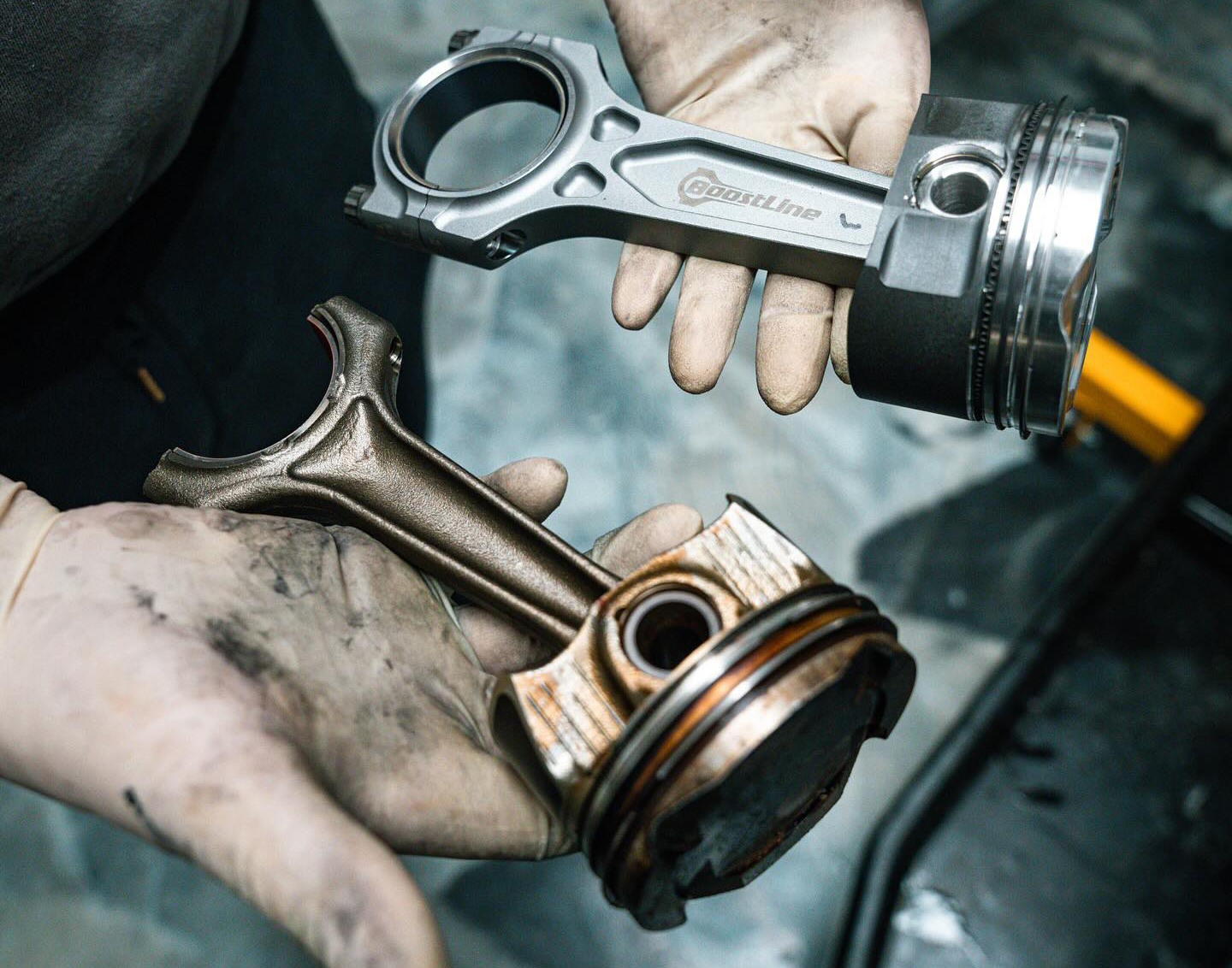
Excessive combustion temperatures, abnormal loading and lubrication problems can contribute to piston damage during a runaway event.
Potential findings include damaged ring lands, cracked piston crowns, scuffed skirts and distorted cylinder surfaces.
Diesel engine piston failure may also release debris into the combustion chamber or crankcase, creating additional inspection requirements.
Valve train damage
Engine valve trains are designed to operate within defined speed ranges. Excessive rotational speed may prevent valves from following their intended motion accurately, depending on the engine design.
Valve-to-piston contact, damaged valve springs, distorted valves and other mechanical failures are possible consequences.
A detailed inspection should consider cylinder head components, camshaft condition and valve train geometry rather than focusing exclusively on the pistons.
Connecting rod deformation
Overspeed increases inertial forces acting on connecting rods and associated fasteners. Components that appear visually intact may have experienced stresses requiring further dimensional and structural evaluation.
Our article on connecting rod bushing failures explains why comparatively small dimensional problems within these assemblies can affect overall engine reliability.
Crankshaft and bearing deterioration
Abnormal operating speed, elevated temperatures and possible oil depletion can compromise lubrication throughout the rotating assembly.
Bearings may experience surface deterioration, while crankshaft journals can sustain scoring or other damage. The extent of deterioration depends on the incident duration, engine speed and lubrication conditions.
For eligible ferromagnetic components, Magnaflux crack detection can identify certain surface and near-surface discontinuities that ordinary visual inspection may miss.
How machine shops assess an engine after runaway
A successful repair begins with determining whether the engine’s major components remain structurally sound and dimensionally suitable for reuse.
Establish the incident history
Technicians should review available overspeed records, oil pressure data, shutdown alarms and maintenance information. These records help distinguish a brief overspeed incident from prolonged operation under abnormal conditions.
The engine’s original failure mechanism should also be documented before damaged components are discarded.
Examine cylinder head and valve train assemblies
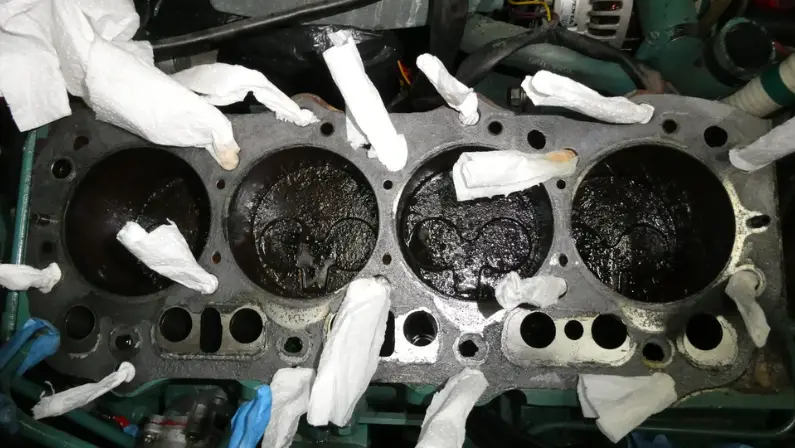
Inspection can identify evidence of valve-to-piston contact, worn guides, damaged sealing surfaces and other consequences of excessive engine speed.
Where necessary, machining and component replacement can restore eligible assemblies to the manufacturer’s approved service limits.
Verify the condition of structural components
Engine blocks require careful evaluation of cylinder dimensions, main bearing alignment and structural integrity.
Professional engine block inspection before machining helps identify conditions that could make an apparently straightforward rebuild unsuitable.
Determine the appropriate restoration scope
Inspection findings should separate components that are reusable, components that require machining and components that must be replaced.
This distinction helps equipment owners avoid replacing serviceable parts while ensuring damaged assemblies are not returned to operation.
Can an engine be rebuilt after diesel runaway?
Yes, provided that inspection confirms its major components remain suitable for restoration under manufacturer-approved repair specifications.
| Damage assessment | Recommended consideration |
|---|---|
| No permanent dimensional changes | Correct the original fault and complete verification |
| Damaged valves or valve guides | Cylinder head restoration |
| Worn or damaged cylinder surfaces | Evaluate precision machining |
| Repairable journal damage | Approved crankshaft restoration |
| Extensive casting or rotating assembly damage | Compare rebuilding with replacement |
Motor Service Group’s diesel engine repair support in Miami provides component-level assessment and precision machining for heavy-duty applications.
Determine whether your diesel engine is repairable
An overspeed incident does not automatically justify complete engine replacement. Professional inspection can establish the actual extent of internal damage and help you make an informed rebuilding decision.
How to reduce the risk of diesel engine runaway
Maintenance programs should prioritize unusual oil consumption, turbocharger condition, crankcase ventilation and fuel control system performance.
Industrial operators should also maintain manufacturer-approved overspeed protection and relevant emergency shutdown equipment. Protective devices should be inspected and tested by qualified personnel according to the applicable maintenance schedule.
For engines working in hazardous atmospheres, equipment suitability and site-specific safety requirements are especially important.
Any recurring mechanical problem should be investigated at its source. Understanding the root causes of repeat diesel engine failures can help maintenance teams develop more reliable repair strategies.
Recovering from diesel engine runaway
Restoring an engine after runaway requires more than replacing the most visibly damaged components. Reliable operation depends on identifying the initiating fault, assessing mechanical integrity and completing the necessary machining within approved specifications.
Motor Service Group has supported the diesel engine industry since 1949, providing specialized services for marine engines, fleets, industrial machinery and heavy equipment.
Explore our precision diesel engine machining services or call (305) 592-2440 to discuss your component inspection and restoration requirements.
Frequently asked questions
1. What is the most common cause of diesel engine runaway?
There is no single cause that applies to every diesel engine. Unintended oil ingestion, often associated with turbocharger or crankcase ventilation problems, is a recognized mechanism. Excessive fuel delivery and combustible vapors entering the intake can also cause uncontrolled engine acceleration.
2. Can a modern diesel engine experience runaway?
Yes. Modern electronic fuel controls can reduce certain overspeed risks, but they cannot necessarily prevent an engine from consuming unintended fuel through its intake. Appropriate maintenance, protective systems and manufacturer-approved shutdown arrangements remain important.
3. Does turning off the ignition stop diesel runaway?
Not always. If the engine is burning lubricating oil or another unintended fuel source, shutting off normal fuel delivery may not stop combustion. Operators should follow the manufacturer’s emergency procedures and avoid approaching an uncontrolled engine.
4. Can diesel runaway destroy an engine?
Yes. Severe overspeed can cause extensive damage to pistons, connecting rods, valve train components, bearings and engine castings. Some incidents result in catastrophic failure, while others leave components suitable for repair following a thorough professional inspection.
5. Can a turbocharger cause diesel engine runaway?
Certain turbocharger failures can allow lubricating oil to enter the air intake, where the engine may consume it as fuel. Significant intake oil contamination, particularly when accompanied by increased oil consumption, should be investigated before the equipment returns to service.
6. Can you restart a diesel engine after runaway?
An engine should not be restarted until qualified technicians have identified the cause of the runaway and evaluated the resulting damage. Restarting without inspection could aggravate existing mechanical deterioration or allow the original uncontrolled acceleration problem to recur.