

An engine can operate reliably for thousands of hours, yet a single incident involving liquid entering its cylinders can bring it to an immediate stop. For diesel engines powering marine vessels, commercial trucks and heavy machinery, the consequences can extend far beyond an unexpected breakdown.
A hydrolocked engine can suffer internal damage that is not immediately visible. Even if the engine starts again after the liquid is removed, weakened connecting rods, damaged pistons and compromised cylinder walls may create problems later.
Understanding how hydrolock occurs, recognizing its warning signs and choosing the correct repair approach can help equipment owners avoid unnecessary engine replacement and recurring mechanical failures.
What is a hydrolocked engine?
A hydrolocked engine occurs when enough water, coolant, fuel or another liquid enters a cylinder to prevent the piston from completing its normal compression stroke.
Unlike the air inside a diesel combustion chamber, liquids are practically incompressible under normal engine operating conditions. When the piston moves upward against trapped liquid, the resulting resistance can stop crankshaft rotation or overload internal components.
The extent of the damage depends on the amount of liquid present, engine speed and operating conditions when the incident occurs.
An engine that experiences hydrolock during startup may suffer less damage than one operating under heavy load. However, neither situation should be considered harmless without a mechanical inspection.
What causes engine hydrolock?
Although driving through deep water is commonly associated with hydrolock, heavy-duty diesel engines face several additional risks.
Water entering the air intake
Flooding, submerged air intakes and poorly protected intake systems can allow water to enter the combustion chambers.
Construction equipment operating in flooded environments and commercial vehicles traveling through standing water are particularly vulnerable. Once sufficient water reaches a cylinder, the piston may encounter more resistance than its connecting rod can withstand.
Internal coolant leakage
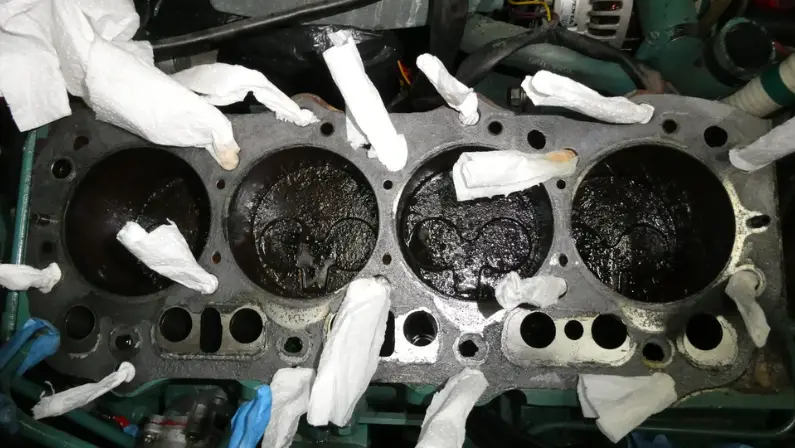
Engine hydrolock can develop without any exposure to external water. A damaged head gasket, cracked cylinder head or compromised engine block can allow coolant to enter a combustion chamber.
Coolant may accumulate while the equipment is parked, creating a hydraulic obstruction when the operator attempts to restart the engine.
Professional cylinder head repair and inspection can help identify structural damage responsible for internal coolant leakage.
Marine exhaust system problems
Marine diesel engines face unique exposure to water through their exhaust and cooling systems. Depending on the installation, damaged components, improper exhaust configuration or water backflow may allow water to reach the cylinders.
This risk makes post-failure inspection especially important for commercial vessels and recreational boats operating in South Florida.
Saltwater introduces an additional concern because corrosion can continue damaging internal surfaces after the original hydrolock event.
Excessive fuel entering a cylinder
A malfunctioning fuel injector may allow more fuel into a cylinder than the engine can safely accommodate. In severe cases, accumulated fuel can contribute to hydraulic locking.
Fuel contamination may also reduce the lubricating properties of engine oil, creating additional risks for crankshaft journals and bearings.
What are the symptoms of a hydrolocked engine?
Hydrolock symptoms vary depending on whether the engine was running or stationary when liquid entered the cylinder.
| Symptom | Possible explanation |
|---|---|
| Engine suddenly stops | Liquid obstructing piston movement |
| Starter cannot rotate the engine | Mechanical resistance inside a cylinder |
| Coolant level drops unexpectedly | Possible internal coolant leakage |
| Uneven running after an incident | Connecting rod distortion or compression loss |
| Persistent mechanical noise | Internal component damage |
| Reduced engine power | Poor compression or damaged pistons |
These symptoms do not independently confirm hydrolock. Electrical starter faults, seized bearings and other mechanical failures can produce similar behavior.
Repeated attempts to start a suspected hydrolocked engine can worsen the damage. Equipment should remain out of service until a qualified technician identifies the cause.
How hydrolock damages internal engine components
The most expensive consequences of hydrolock often occur beneath the cylinder head, where excessive mechanical force travels through the engine’s rotating assembly.
Bent or damaged connecting rods
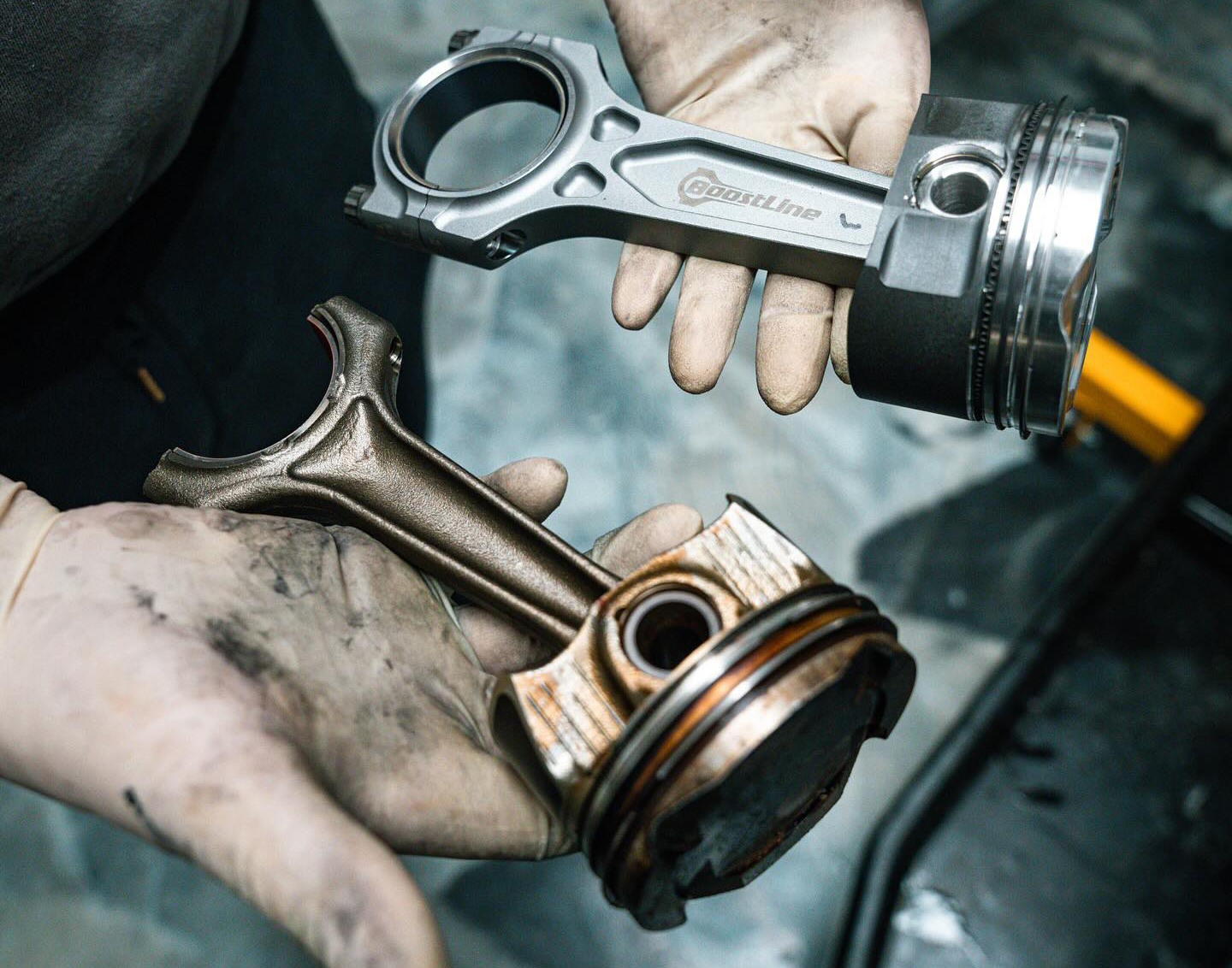
Connecting rods transfer piston movement to the crankshaft. During hydrolock, a rod may experience compressive forces beyond its intended operating limits.
A slightly bent rod can alter piston travel without completely preventing the engine from running. This may create uneven compression, abnormal cylinder wear and reduced long-term reliability.
Professional connecting rod inspection and repair helps establish whether the affected components remain within acceptable dimensions.
Cracked pistons and damaged cylinder walls
Hydraulic pressure and sudden mechanical loading may damage piston crowns, ring lands and piston skirts.
Some cracked piston symptoms become noticeable only after the engine returns to operation. Damaged rings or distorted pistons may also accelerate cylinder wall wear and increase oil consumption.
Engine block and crankshaft damage
Severe connecting rod failure can damage the surrounding engine block. Sudden interruption of crankshaft rotation may also place abnormal loads on bearings and journals.
Our guide to cracked engine block repair explains the factors that influence whether a damaged casting can be restored or requires replacement.
How professionals diagnose a hydrolocked diesel engine
A reliable diagnosis involves investigating both the liquid entry point and the mechanical consequences of the incident.
The initial assessment considers the engine’s operating history. Flood exposure, unexplained coolant loss, prolonged marine engine cranking and recent fuel system problems may provide useful clues.
Once the equipment has been safely isolated, qualified technicians can inspect the cylinders for liquid contamination and assess internal component condition.
Piston height measurements are particularly valuable. Comparing piston positions at top dead center, according to the manufacturer’s procedures, can reveal dimensional differences associated with connecting rod distortion.
Cylinder heads and other suitable castings may also require professional pressure testing to locate hidden leakage paths.
Where significant impact loading has occurred, component inspection should extend beyond the cylinder in which liquid was discovered.
Can a hydrolocked engine be repaired?
Yes. A hydrolocked engine can often be repaired when its major structural components remain within manufacturer-approved repair limits. The appropriate solution depends on inspection results rather than whether the engine can still rotate.
| Inspection finding | Potential repair approach |
|---|---|
| Liquid intrusion without permanent damage | Correct the intrusion source and restore affected systems |
| Bent connecting rod | Replace the damaged rod and inspect associated components |
| Damaged piston or rings | Replace affected parts and inspect cylinder dimensions |
| Scored cylinder walls | Evaluate honing, boring or sleeving |
| Repairable casting damage | Approved precision machining or restoration |
| Extensive structural failure | Evaluate engine or major component replacement |
Professional diesel engine block machining can restore eligible cylinder surfaces and critical dimensions when the original casting remains suitable for reuse.
Get your diesel engine inspected before replacing it
Motor Service Group provides precision component inspection and machining for marine, industrial and commercial diesel engines throughout Miami and South Florida. A detailed assessment can help determine whether your existing engine components are suitable for restoration.
How much does hydrolocked engine repair cost?
Hydrolock repair costs depend on the engine model, accessibility, extent of internal damage and availability of replacement components.
An incident requiring contamination removal and correction of an external leak will generally involve a different repair scope than one requiring piston replacement, cylinder machining or a complete teardown.
For commercial equipment, downtime, transportation and parts availability should also be considered when comparing repair and replacement.
Our guide to the diesel engine repair process provides additional insight into the stages involved in professional component restoration.
How to prevent engine hydrolock
Prevention begins with understanding the equipment’s operating environment and maintaining the systems that separate liquids from combustion chambers.
Marine operators should inspect exhaust and water-injection systems according to manufacturer recommendations. Fleet managers should establish procedures for flood exposure, while industrial maintenance teams should investigate unexplained coolant loss before returning equipment to operation.
After suspected liquid intrusion, early inspection is considerably more valuable than repeatedly attempting to restart the engine.
Restore your diesel engine with confidence
Hydrolock does not automatically mean an engine has reached the end of its service life. Accurate measurements and structural inspection can reveal which components remain suitable for restoration and which require replacement.
Serving the diesel engine industry since 1949, Motor Service Group supports rebuilders, marine operators and commercial equipment owners with specialized machining and inspection services.
Contact Motor Service Group to discuss your engine’s condition or request a machining estimate.
Frequently asked questions
1. Can a hydrolocked engine be saved?
Yes, depending on the extent of the damage. Engines with limited liquid intrusion may remain repairable, while damaged rods, pistons or castings may require replacement or machining. A professional inspection is necessary to establish whether the engine can return to reliable operation.
2. Will a hydrolocked engine turn over?
A fully hydrolocked cylinder can prevent the crankshaft from rotating normally. However, an engine with partial liquid intrusion or damage from a previous hydrolock incident may still turn over. Crankshaft movement alone does not establish whether internal components are undamaged.
3. Can hydrolock bend a connecting rod?
Yes. When a piston encounters trapped liquid during its compression stroke, excessive force can permanently deform the connecting rod. Even minor distortion may affect piston position and compression, making dimensional inspection important after suspected hydrolock.
4. Can a diesel engine hydrolock from coolant?
Coolant can cause hydrolock when it enters a cylinder through a failed head gasket, cracked casting or another internal leakage path. The risk can increase when coolant accumulates while the engine is stationary and the operator subsequently attempts to restart it.
5. Is a hydrolocked engine permanently damaged?
Not necessarily. Permanent damage depends on the amount of liquid, operating speed and mechanical forces involved. An inspection should evaluate structural integrity, connecting rod geometry, piston condition and cylinder dimensions before deciding whether the damage is permanent.
6. What should you do if a marine diesel engine hydrolocks?
Keep the engine out of service and follow the vessel manufacturer’s emergency procedures. Arrange a professional marine diesel inspection to identify the water entry source, evaluate internal damage and address possible saltwater contamination before attempting to return the engine to operation.