

You open the radiator cap or check the reservoir and find a brown, milky film where clean coolant should be. The first guess is almost always a blown head gasket. Sometimes that is right. Often it is not, and replacing the wrong part means tearing the engine down twice.
An oil in coolant diesel engine problem has several possible sources, and each one needs a different repair. This guide explains what you are seeing, what can cause it, and how testing at a machine shop pins down the real source before anyone orders parts.
What Oil in Coolant Means for Your Diesel Engine
Oil and coolant run in separate passages that sit close together. When a wall or seal between them fails, the two fluids start to mix.
Signs You Are Looking at Oil in the Coolant
- A tan, brown, or milky film on the surface of the coolant
- Oily beads or a dark ring around the reservoir neck
- Coolant that looks like chocolate milk or feels slick
- A coolant level that keeps dropping with no external leak
- Overheating that comes back after a refill
Why You Should Stop Running the Engine
Oil-contaminated coolant carries heat poorly, so the engine runs hotter than it should. If the leak runs the other way, coolant thins the oil and starves the bearings. Running the engine to see what happens can turn a repair into a rebuild.
Common Causes of Oil in Coolant in a Diesel Engine
Several parts can let the two fluids cross. Symptoms look alike, so the list below is a starting point and not a diagnosis.
Head Gasket Failure
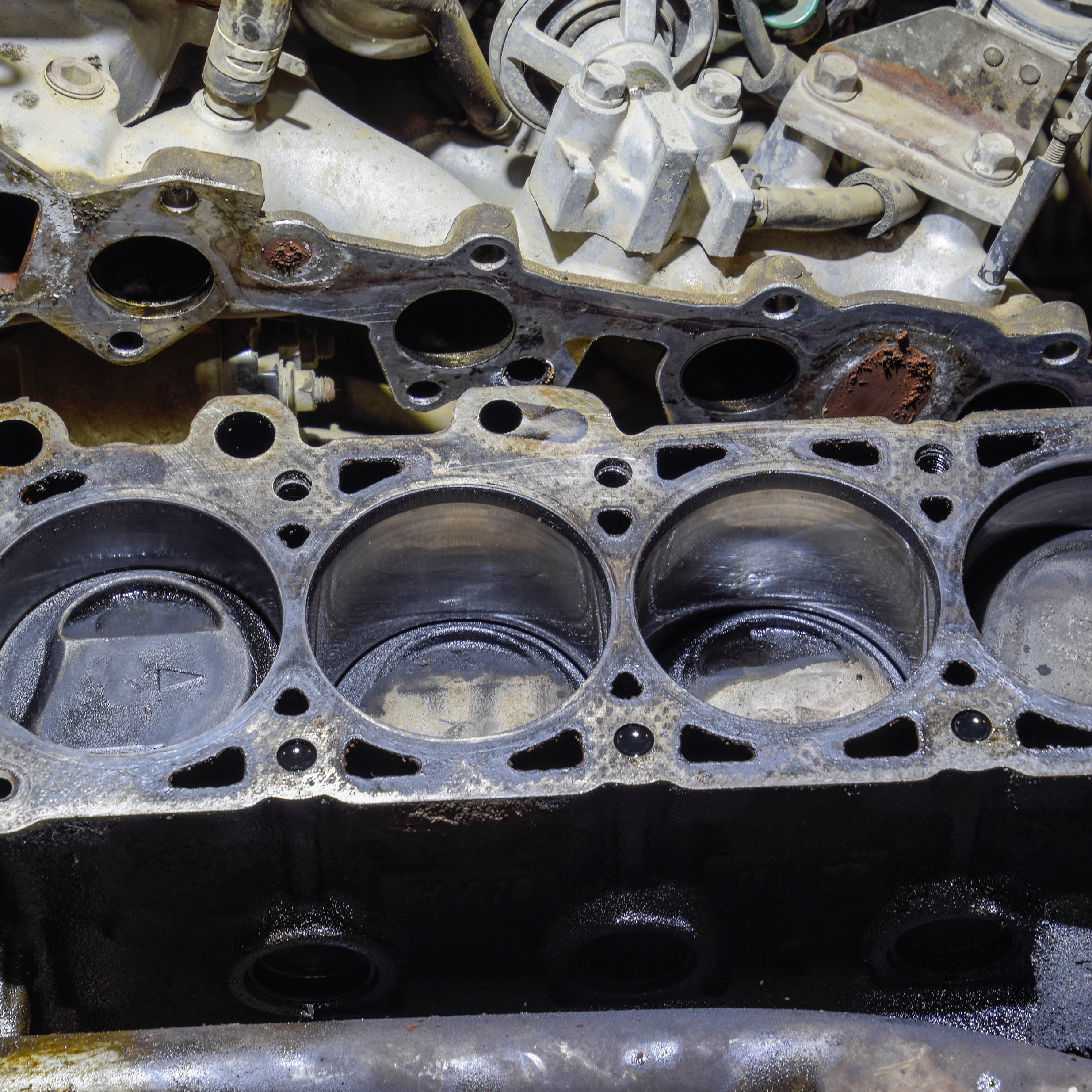
The gasket seals the cylinder head to the block, and it has to keep oil, coolant, and combustion pressure apart. Overheating, a warped deck, or a distorted head can break that seal.
Cracked Cylinder Head or Block
Heavy-duty diesel heads and blocks can crack over time from overheating, stress, or corrosion in the cooling system. These cracks are often too fine to see, and they may only open up once the engine is hot.
Oil Cooler Failure
On many diesel engines, the oil cooler sits in the coolant circuit. A leaking core lets oil pass into the coolant. It is a common culprit that gets overlooked.
Cylinder Liners and Injector Tubes
Worn or cracked liners and failed seals can let fluids cross, and so can a leaking injector tube.
If you want to learn more about how injector tube leaks are diagnosed, check out our guide on diesel injector tube replacement.
Cracked Cylinder Head Symptoms: What Points Toward the Head
A cracked head is one of the more serious causes, so it helps to know what it tends to look like.
Symptoms That Often Show Up Together
- White smoke from the exhaust, especially after startup
- Coolant loss with no puddle under the engine
- Overheating, even with a full cooling system
- Bubbles in the coolant while the engine runs
- Milky or discolored engine oil
- Rough running or a misfire on one cylinder
Why Symptoms Alone Cannot Name the Cause
Every item on that list can also come from an oil cooler, a liner problem, or a failed seal. Guessing from symptoms is how the wrong part gets replaced. Testing is what separates the causes.
If you want to learn more about how heads are repaired, check out our guide on cylinder head repair in Miami.
Diesel Engine Pressure Test Coolant Checks: How a Machine Shop Confirms the Source
With the engine apart, a shop can test each component on its own. That is how the real source gets found.
Pressure Testing Heads, Blocks, and Coolers
Our cylinder head test stand checks that a head is not leaking water through a crack, pinhole, or injection tube. Blocks can be set up so the water system is pressure tested to spot pinholes and cracks, and we test certain oil coolers to confirm they are leak-free and safe to reuse. A diesel engine pressure test coolant check like this separates a leaking component from a failed gasket.
If you want to learn more about how leaks are located, check out our guide on pressure testing engine components.
Magnaflux Crack Detection and Surface Inspection
Magnaflux uses a magnetic field and charged particles that glow under ultraviolet light, revealing cracks that cannot be seen with the naked eye. A head that looks sound is either cleared or caught.
Measuring Deck Surfaces and Liner Seats
A gasket can fail simply because the surface under it is no longer flat. Measuring the deck and the liner seats shows whether a distorted surface is to blame, and a new gasket alone would not fix that.
What Repair Follows Each Finding
Once the source is confirmed, the repair follows from it.
Gasket and Deck Surface Repairs
If the gasket failed because the head or deck is out of flat, the surfaces are machined true before the new gasket goes on. Without that step, it fails the same way.
Cylinder Head: Resurface or Replace
A cylinder head is resurfaced if it remains within manufacturer tolerances, and replaced if it exceeds allowable thickness or warpage limits. Pressure testing and Magnaflux show whether a crack is part of the problem before that decision is made.
Block Damage and Sleeving
We do not weld cracked blocks, because a weld does not hold up under the heat cycling a block sees in service. Depending on the damage, the block is sleeved or replaced, and worn cylinder walls can be bored and sleeved back to specification.
Cooler and Liner Issues
A cooler that fails its pressure test should not go back on the engine. Damaged liner sealing surfaces can be repaired by manufacturing and installing new sleeves, which stops coolant or water from leaking into the engine oil.
Why Bring It to a Diesel Engine Machine Shop in Miami
A diagnosis that comes from testing is worth more than one that comes from guessing.
Testing Before Parts Are Ordered
The costly mistake in every oil in coolant diesel engine case is buying parts for a problem that lives somewhere else. Testing first means the repair matches the cause.
Motor Service Group: Testing and Machining Since 1949
Motor Service Group has served diesel engine owners across Miami since 1949. We perform precision machining, inspection, and repair on blocks, cylinder heads, crankshafts, camshafts, and connecting rods, and we service most major diesel brands. Marine, fleet, and heavy-duty owners rely on us because the diagnosis is tested, not assumed. That is why we consider ourselves the best diesel engine machine shop in Miami.
Serving Doral, Medley, and Hialeah
Fleet and trucking operators in Doral, Medley, and Hialeah can reach us easily, and marine owners around Miami bring us engines as well. We also work with customers across Miami-Dade, Broward, and Palm Beach.
Quick Answers
What causes oil in the coolant of a diesel engine?
The most common causes are a failed head gasket, a cracked head or block, a leaking oil cooler, or a liner or injector tube problem.
What are cracked cylinder head symptoms?
White smoke, coolant loss with no visible leak, overheating, bubbles in the coolant, and milky oil are common signs. Testing confirms whether the head is the cause.
Can I keep driving with oil in the coolant?
No. Contaminated coolant cools poorly, and the engine can overheat or lose oil protection.
How is the source of the leak confirmed?
By pressure testing, Magnaflux crack detection, and measuring the deck and liner seats, each done on the individual component.
Does oil in coolant always mean a blown head gasket?
No. Oil coolers, cracked heads or blocks, and liners can cause the same symptoms.
Find It Before You Fix It
A repair only works when it matches the real cause. Motor Service Group supports fleet, marine, and heavy-duty owners across Miami and South Florida with machining, inspection, and repair done in-house.
Bring us the engine and we will test it to find the source. Contact us today.