

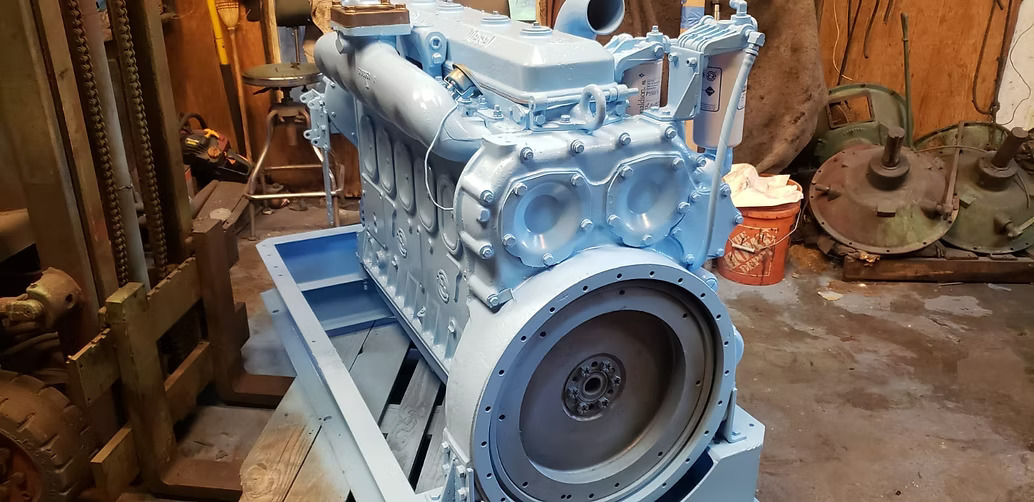
Fleet managers and marine operators hear the same phrase after every engine failure: “we can fix that.” The question is never whether a shop can put the engine back together. The question is whether what they call a repair will hold up under commercial operation. A basic repair addresses the symptom. A proper motor reparation addresses every component that contributed to the failure and every part affected by the next operating cycle. This post explains the difference, the steps that define a true reparation, and what to look for when you need a rebuild that performs rather than one that merely starts.
Why Basic Repairs Fail on Commercial Diesel Engines
What a Basic Repair Actually Addresses
A basic repair replaces what visibly failed. A blown head gasket gets a new gasket. A seized bearing gets replaced. The engine goes back together and returns to service. What does not happen is any evaluation of why the gasket failed, what condition the head surface is in, whether the block deck is warped, or what the bearing journal looks like after the seizure. The fix addresses the part, not the condition.
The Components That Get Skipped
In a basic repair, the parts that do not show obvious failure get no attention. The crankshaft journals get wiped down, not measured. The connecting rods get reused without bushing inspection or alignment checks. The cylinder bores get a visual pass, not a measurement for wear or taper. The cylinder head gets a new gasket without pressure testing or crack detection. Every skipped step is a deferred failure waiting for operating hours to accumulate.
For a detailed look at what happens when connecting rod bushings are skipped during inspection, read our post on why connecting rod bushings cause major engine failures when overlooked.
Why the Same Engine Fails Again
Repeat failures on commercial diesel engines are almost always the result of incomplete reparation. The visible failure was addressed but the underlying wear, distortion, or damage was not. An engine returned to service with worn bores, marginal crankshaft clearances, and an uninspected head will run for a while. When it fails again, the cost is higher than if the full reparation had been done the first time.
What Defines a Proper Motor Reparation
Complete Disassembly Before Any Evaluation
A proper motor reparation begins with complete disassembly. Every part must be accessible before inspection is meaningful. Cleaning follows disassembly. The block, head, rods, crankshaft, and all related items must be free of oil, carbon, and contamination before measurements are taken. An evaluation on a dirty, partially assembled engine produces incomplete information and unreliable decisions.
Component-by-Component Inspection, Not Visual Checks
Each part is evaluated individually against OEM specification. This means:
- Block deck surface flatness measured before any restoration begins
- Cylinder bore diameter, taper, and out-of-round measured at multiple depths
- Crankshaft journal diameter, surface condition, and geometry documented
- Connecting rod alignment, bushing condition, and bore size verified
- Cylinder head checked for cracks, warping, valve seat condition, and guide wear
Visual checks confirm obvious damage. Measurement confirms actual condition. Both are required.
Restoring to Specification, Not Approximation
A proper reparation restores parts to OEM specification, not to whatever tolerance a facility judges acceptable by eye. Bores are sized correctly for the piston and ring package. Crankshaft journals are ground or polished to the correct dimension for bearing clearance. Every step has a target value and a verification check. Approximation is not acceptable on parts that carry the combustion loads of a commercial diesel engine.
The Inspection Standards That Separate Reparation From a Basic Fix
Crack Detection on Every Critical Component
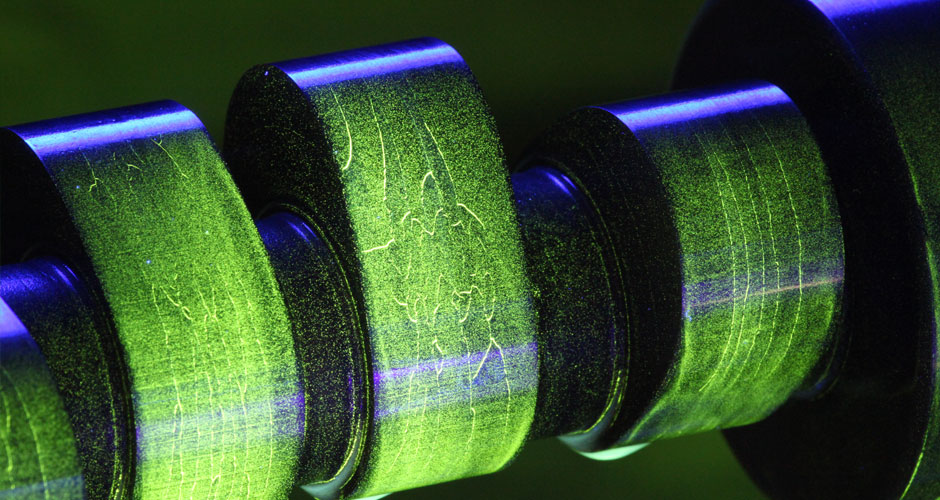
Magnaflux crack detection must be performed on the block, cylinder head, crankshaft, and connecting rods before any machining begins. Hidden cracks in fillet radii, combustion chambers, and casting walls do not appear on visual inspection. A part with an undetected crack that returns to service will fail. Crack detection determines whether any further restoration is even worth doing.
Pressure Testing Before Assembly
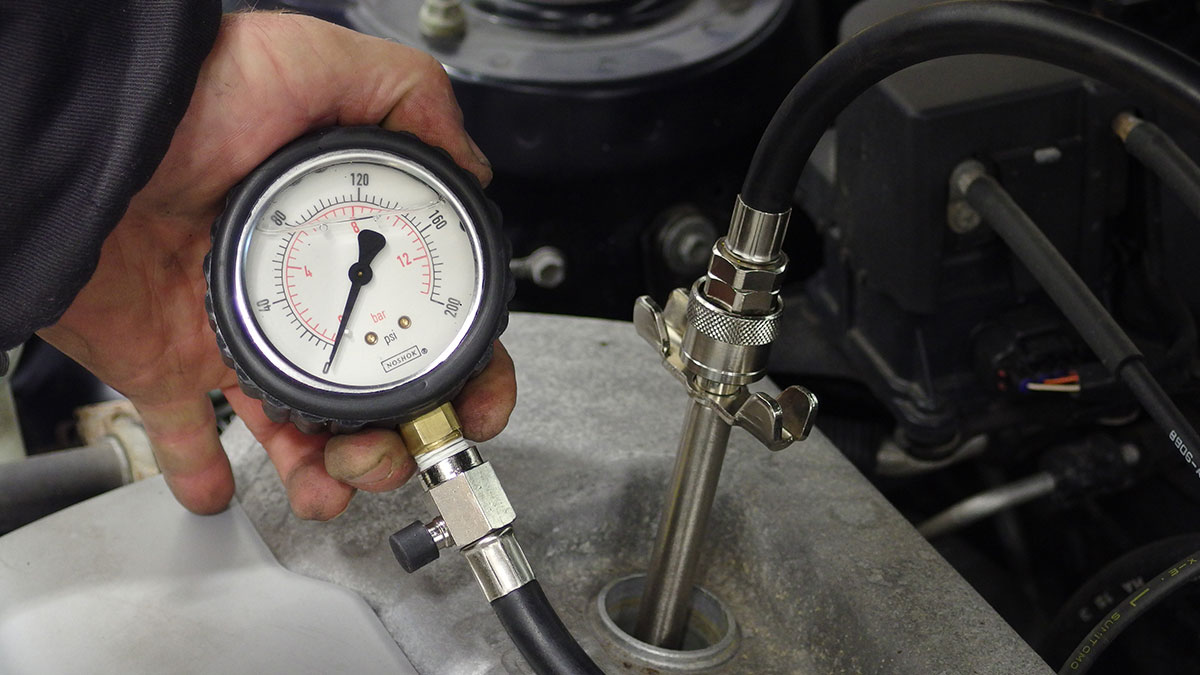
Cylinder heads and engine blocks must be pressure tested before assembly. This identifies internal leaks, porosity, and casting failures that measurement and visual inspection cannot find. A head that passes magnaflux and measures correctly can still fail a pressure test. All three steps serve different purposes and none replaces the others.
For a complete guide on what pressure testing reveals and why it must happen before any cylinder head or block is assembled, read our post on diesel engine pressure testing and what it protects against.
Measurement Documentation at Every Stage
A proper motor reparation produces written records. Pre-restoration measurements, post-restoration measurements, clearance specifications, and test results should all be documented before the engine leaves the facility. This confirms the process was completed correctly and provides a baseline for future maintenance. A team that cannot produce these records did not complete a proper reparation.
The Work a Proper Diesel Motor Reparation Requires
Block Cleaning, Surfacing, and Bore Work
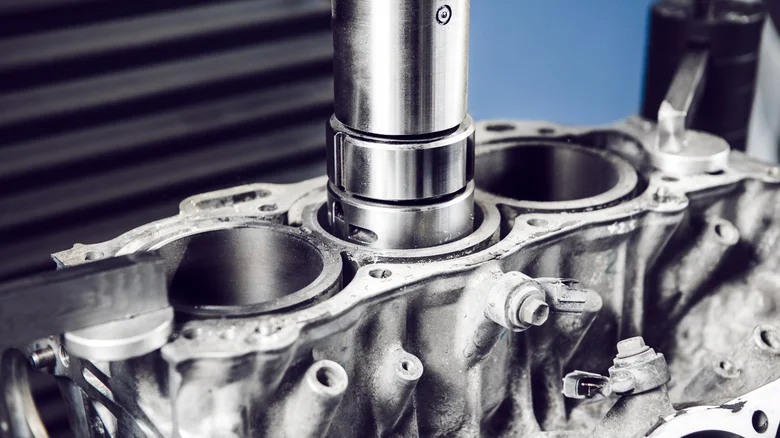
The block must be cleaned, inspected, and measured before restoration begins. Deck surface flatness is checked and corrected if needed. Cylinder bores are resized through boring and honing to restore correct geometry and surface finish. Align boring or align honing is performed if main bore geometry is outside specification.
Cylinder Head Service From Disassembly to Assembly
The head goes through a complete process: cleaning, disassembly, crack detection, pressure testing, valve inspection, seat cutting, guide evaluation, resurfacing, and assembly verification. Each step addresses a specific failure mode. A cylinder head returned to service without pressure testing is a liability regardless of how well the rest of the reparation was performed.
Crankshaft, Connecting Rod, and Clearance Verification
The crankshaft is cleaned, measured, crack tested, and either polished, ground, or replaced based on the findings. Connecting rods are checked for alignment, bushing condition, and bore size. Every clearance is measured and documented before assembly: bearing clearance, end play, and side clearance.
What Documentation a Proper Motor Reparation Should Produce
Before approving any reparation, a fleet manager or marine operator should expect:
- A pre-repair condition report identifying wear, damage, and corrections needed for each part
- Measurement records showing dimensions before and after each machining step
- Crack detection results for all critical items
- Pressure test results for the head and block
- Final clearance measurements confirming assembly specification
- A post-repair summary confirming what was done and what was replaced
A facility that cannot produce this documentation did not perform the process these records reflect. Documentation is not paperwork. It is proof.
How to Evaluate a Facility Before Approving Reparation Work
Questions That Reveal Whether a Facility Performs Reparation or a Basic Fix
Ask directly:
- Do you perform magnaflux crack detection on all critical parts before machining begins?
- Do you pressure test cylinder heads and blocks before assembly?
- Do you provide written measurement records before and after the process?
- Do you perform full cylinder head service including seat cutting and pressure testing?
- Do you verify all bearing clearances before the engine is assembled?
A facility that cannot answer yes to all five is not performing a complete motor reparation.
Red Flags That Signal a Surface-Level Fix
Watch for these indicators:
- No documentation provided after the job is complete
- Turnaround time too short to include measurement, machining, and testing
- No mention of crack detection or pressure testing in the scope
- Heads returned without evidence of resurfacing or valve service
- Crankshaft reused without any discussion of journal condition
What a Professional Machine Shop Brings
A general repair facility can replace parts. A professional machine shop can restore them to specification. The difference is equipment, process, and measurement discipline. Boring bars, surface grinders, valve seat machines, crankshaft grinders, and magnaflux equipment are not found in a general bay. Motor reparation requires all of them.
For a step-by-step breakdown of what the diesel motor reparation process actually involves at a professional machine shop, read our post on what diesel motor reparation actually involves and why precision matters.
How Motor Service Group Performs Diesel Motor Reparation in Miami
Motor Service Group has performed diesel motor reparation in Miami since 1949. The shop operates as a complete machine shop. Block machining, cylinder head service, crankshaft restoration, connecting rod service, pressure testing, and magnaflux crack detection are all performed in-house under one roof.
Every reparation begins with complete disassembly, cleaning, and part evaluation before restoration starts. Measurement records are documented throughout. The team serves commercial fleets, marine operators, heavy equipment owners, power generation customers, and industrial diesel applications across Miami-Dade, Broward, and Palm Beach counties.
Reparation support includes:
- Complete engine block machining including boring, honing, surfacing, and align correction
- Full cylinder head service from disassembly to pressure-tested assembly
- Crankshaft inspection, crack detection, grinding, and polishing
- Connecting rod bushing replacement and clearance verification
- Magnaflux crack detection on all critical parts
- Written measurement documentation throughout the process
Quick Answers
Q: What is the difference between a motor reparation and a basic repair?
A basic fix replaces the failed part and returns the engine to service. A proper motor reparation evaluates every critical component, corrects what requires machining, tests what requires verification, and documents the results before assembly.
Q: What components should a proper diesel engine reparation include?
The block, cylinder head, crankshaft, connecting rods, and all associated clearances. Each requires cleaning, measurement, crack detection where applicable, machining to specification, and verification before assembly.
Q: How do I know if a facility is performing a true reparation or a surface-level fix?
Ask for documentation. A facility performing a proper reparation produces measurement records, crack detection results, pressure test results, and clearance verification. If documentation is not available, the process was not complete.
Q: Does Motor Service Group perform diesel motor reparation in Miami?
Yes. Motor Service Group performs complete diesel motor reparation in Miami with full machine shop capability, documented inspection, and precision machining for commercial fleets, marine operators, and industrial customers across South Florida.
Q: How long does a proper diesel motor reparation take?
Timeline depends on engine size, part condition, and availability. A complete reparation with full machining and testing takes longer than a basic fix by design. Shortcuts in the timeline usually mean shortcuts in the process.
Built for the Long Run
Motor Service Group performs diesel motor reparation the way it should be done: complete disassembly, precision machining, documented inspection, and verified clearances before any engine returns to service. Contact our expert team today to discuss your engine and get a reparation built to last.